
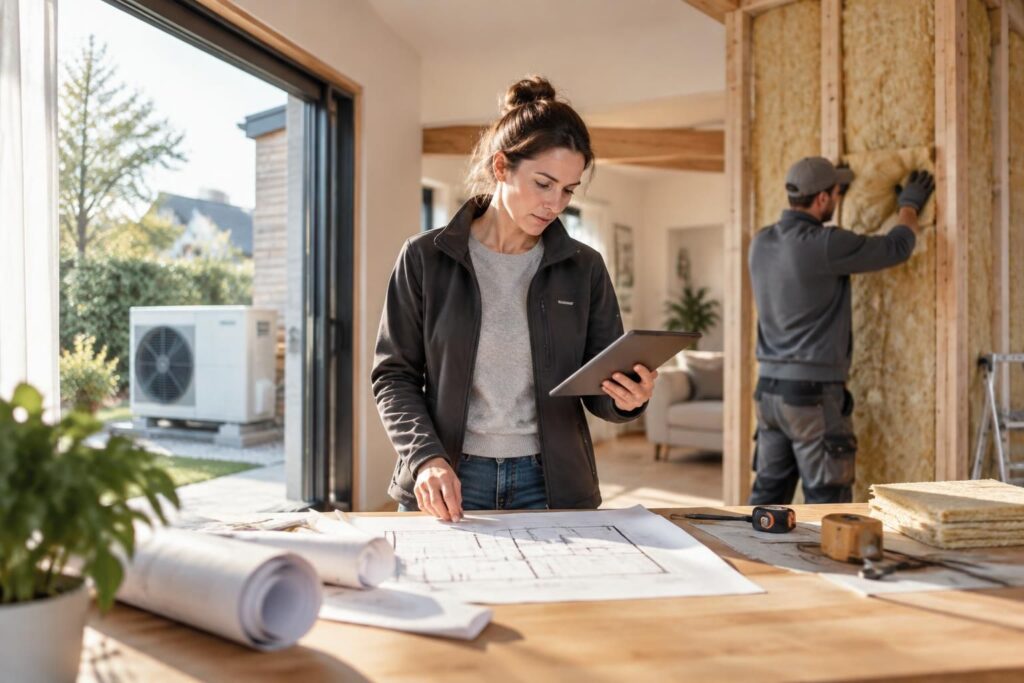
Hi DIYers, Patrick here. To get your energy renovation off to a good start, begin with an assessment, insulate the home, then choose heating suited to your actual needs. This approach avoids poorly ordered expenses and helps you achieve lasting energy savings. In 2026, also check the requirements for grants before signing a quote.
Things to do right away
- Gather your energy bills and information about the home.
- Request an energy assessment or an audit suited to your project.
- Identify cold spots: attics, walls, windows, and ground floors.
- Check that the professionals you contact are RGE-certified for the planned work.
- Review the financial assistance rules before approving the quotes.
To organize your first decisions, also check out this guide to getting started without regrets and these pointers on the order of work for a complete renovation.
Three ways to get your energy renovation off to a good start
An energy renovation means reducing a home’s energy needs while improving comfort. The most effective approach is based on three complementary methods: assessing the current situation, improving the building envelope, and then modernizing the equipment.
1. Start with an energy audit rather than an isolated quote
The DPE provides an initial indication of the home’s energy consumption and emissions. To define a precise plan, an energy audit goes further: it identifies the main sources of heat loss and proposes work scenarios in order of priority.
This step also helps distinguish urgent work from secondary improvements. A France Rénov’ advisor can guide the homeowner through the support process and toward the financial assistance that matches their situation. Rules and amounts change, so it’s best to check them before starting the work.
2. Prioritize insulation and ventilation
Before replacing the boiler, reduce heat loss from the home. The roof and attic are often good places to start; walls, windows, and ground floors can then be addressed, depending on the condition of the building and the budget.
Good thermal insulation limits heat loss in winter and helps keep the house cooler in summer. But a better-insulated house also needs proper ventilation: a suitable mechanical ventilation system (VMC) removes moisture and reduces the risk of condensation.
A common story from renovation projects: a homeowner replaces their heating system before insulating the attic, then discovers that the new equipment is too powerful once the insulation work is complete. “Heat the home first, not the walls facing the outdoors.”
3. Choose efficient heating after the insulation work
Once the home’s energy needs have been reduced, a professional can size an efficient heating system without overestimating its capacity. A heat pump may be suitable for some homes, but its suitability depends in particular on the insulation, local climate, and existing radiators.
Compare several detailed quotes and check the contractor’s qualifications for the type of equipment you’ve chosen. Public grants are generally subject to specific requirements, including the use of an RGE-certified professional for the relevant work.
Planning the work in three steps
Planning the work helps avoid jobs that interfere with one another or require part of the project to be redone. Follow this simple sequence and have a professional confirm your technical choices.
- Step 1: Get a DPE or an audit, then set a realistic goal and preliminary budget.
- Step 2: Improve the building envelope, starting with the areas responsible for the greatest heat loss, and plan for ventilation.
- Step 3: Adapt the heating and hot water systems to the home’s needs after insulation.
| Method | What it’s for | What to watch out for |
|---|---|---|
| Assessment or audit | Identify heat loss and set priorities | Choose an assessment suited to the scale of the project |
| Insulation and ventilation | Reduce energy needs and preserve air quality | Address thermal bridges and don’t neglect air renewal |
| Heating and hot water | Adapt the equipment to the renovated home | Avoid sizing based on the home’s pre-renovation condition |
Two situations to help you choose the right pace
If your budget is tight, proceed in stages, but follow the order set out in the assessment. If your home uses a lot of energy and you’re aiming for a whole-home renovation, get advice before submitting your grant applications.
A video to help you visualize the project stages
This video search helps you review the main areas to assess before starting a project.
Useful questions to ask before starting the work
Should you replace the heating system before insulating?
Generally, no. It’s better to reduce heat loss first, then size the heating system according to the remaining needs.
Is a DPE enough to prepare for the work?
A DPE provides an initial overview of the home’s energy performance. An energy audit offers more detailed work scenarios for planning a major project.
Can the work be carried out in several stages?
Yes, provided you follow a coherent sequence and check that each job remains compatible with the ones that follow. A professional can help you avoid doing things in the wrong order.
When should you check financial assistance?
Before signing the quotes and starting the work. The criteria, amounts, and procedures depend on the scheme and the household’s situation.
Thanks for reading this far; Patrick