
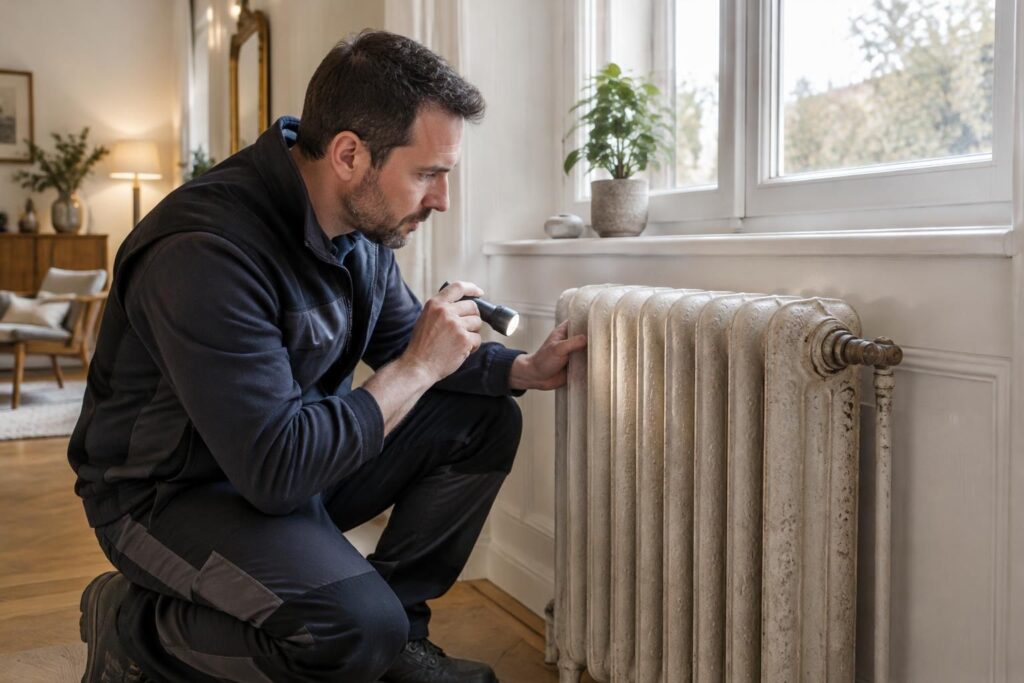
Hi, DIYers, Patrick here. Keep your old heating system if it works well, is safe and doesn’t drive up your energy use; replace it if it becomes unreliable or unsuitable for your home. Since July 1, 2022, installing new oil-fired equipment has been regulated, but keeping and repairing an existing boiler is still possible. Before deciding, compare its condition and efficiency with the cost of a replacement solution.
What to do right away
To avoid making a rushed decision, start with a heating system assessment and check your options before undertaking any work. These tips on assessing before renovating and energy renovation priorities can help you plan the right steps.
- Note recent breakdowns and how often repairs are needed.
- Have a professional inspect the boiler and check its maintenance.
- Compare your bills and energy use over a heating season.
- Check whether your radiators can work with a different system.
- Get several quotes before deciding on the replacement cost.
Old heating system: when to keep it and when to replace it
A boiler that is still working, regularly maintained and suited to your home’s needs can continue to serve you. The lifespan of a heating system varies depending on the model, maintenance and use; age alone isn’t enough to make the decision.
However, repeated breakdowns, hard-to-find parts or uneven comfort are signs that you should consider replacing the heating system. An aging installation may also use more energy, but an effective energy renovation doesn’t mean replacing an appliance without checking the insulation and your actual needs.
As a simple principle puts it: “Replace equipment when its condition or efficiency warrants it, not just because it’s old.” A professional’s advice can help you distinguish between a reasonable repair and an investment that has become necessary.
Oil-fired boilers: what the regulations allow
Since July 1, 2022, new heating or hot water production equipment must comply with a greenhouse gas emissions limit of 300 gCO₂e/kWh PCI. Conventional new oil-fired boilers generally exceed this threshold. This does not mean oil is prohibited in existing installations: they can still be used and repaired.
For a replacement, you must choose equipment that complies with the regulations in force. Some models designed to run on F30 biofuel, which is made in part from fuel oil and fatty acid methyl esters, may meet the applicable requirements. Before buying, check that the installation and fuel are compatible with a heating professional.
Exemptions may also apply in certain situations, for example, if there are technical constraints related to the building or no suitable connection option is available. These exceptions depend on the application and regulatory conditions: have a professional confirm whether your situation qualifies before signing a quote.
| Condition of the installation | Option to consider | Points to watch |
|---|---|---|
| Boiler is maintained and reliable | Keep it and monitor its efficiency | Watch for breakdowns and check your bills |
| Occasional, repairable breakdown | Have it repaired after an assessment | Compare the repair cost with its overall condition |
| Repeated breakdowns or appliance beyond repair | Consider compliant equipment, including a solution compatible with F30 biofuel | Check the regulations and compatibility |
| Heat pump project | Assess the radiators and insulation | Confirm that it can operate at low temperatures |
Keep your radiators when installing a heat pump
Replacing the boiler doesn’t necessarily mean replacing all the radiators. An air-to-water heat pump can often be connected to an existing water circuit, but the result depends on the size of the radiators, the required temperature and the home’s insulation.
Cast-iron or steel radiators may be suitable if they can provide enough heat with cooler water. If some are too small, you can replace only the affected radiators or plan for supplementary heating; a heat assessment helps avoid installing an incorrectly sized heat pump.
In a poorly insulated home, reducing heat loss before changing the heat generator can improve comfort and energy performance. This is often the right order: reduce your heating needs, then choose suitable equipment.
Two situations to help you decide quickly
If your boiler is reliable, well maintained and heats your home properly, keep it for now and have its efficiency checked. If it keeps breaking down or can no longer be repaired, compare compliant options and the total cost before replacing it.
Three steps to making a decision
- Step 1: Have the boiler, installation safety and radiators checked; ask for a written assessment.
- Step 2: Compare your bills, expected repair costs and your home’s heating needs, taking its insulation into account.
- Step 3: Get detailed quotes for both repairs and replacement options, then check the available incentives and applicable regulatory requirements.
During a visit, a homeowner discovered that one room was poorly heated because a radiator was undersized, not because of the boiler. The inspection prevented a hasty decision to replace the entire system.
Practical questions about an old heating system
Can you still use an existing oil-fired boiler?
Yes. The regulations mainly concern the installation of non-compliant new equipment; an existing boiler can be kept and repaired if it is safe and in working order.
Can you replace an oil-fired boiler with an F30 biofuel model?
Some equipment designed for F30 biofuel may meet the applicable requirements. A professional should check the model, the installation’s compatibility and the regulations in force.
Do you need to change your radiators to install a heat pump?
Not necessarily. Existing radiators may be suitable if they have enough capacity at the heat pump’s operating temperature and the home is suitable.
When is the right time to replace your heating system?
Consider replacement when breakdowns keep recurring, the appliance cannot be repaired, it heats poorly or its operating costs become too high. An assessment helps you compare repair and replacement.
Thanks for reading this far; Patrick