
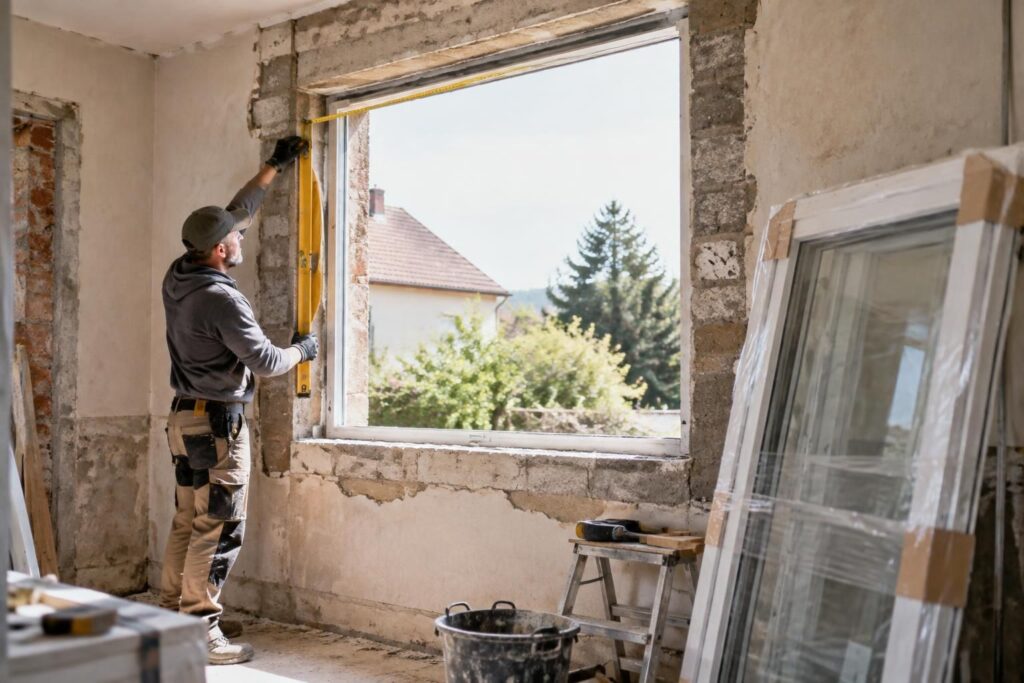
Hi, DIYers, Patrick here. Before the windows, secure the roof and fix any masonry problems around the openings. The right sequence is simple: roofing, preparing the window reveals, then installing the windows, before finishing the façade. This order limits water ingress and avoids having to redo work that is already finished.
Do this right away
- Look for signs of water ingress on the ceiling and around the openings.
- Check that the roof and gutters are in good condition.
- Check that the walls and window reveals are structurally sound.
- Decide whether the walls will be insulated from the inside or the outside.
- Ask for quotes that specify the installation method and waterproofing.
To determine the right order for the work, start by identifying tasks that could damage the new windows or prevent them from being installed. These guidelines on the order of renovation work and on coordinating roofing and windows will help you plan the project.
Roofing and masonry: work to take care of first
A leaking roof must be repaired before the windows are installed. Otherwise, water can damage the walls, finishes and new frames. Also check the gutters and downspouts: ongoing water ingress makes subsequent work riskier.
The masonry around the openings needs the same inspection. If a lintel is cracked or a reveal is crumbling, it must be repaired before the windows are installed. A new window will not fix an unstable support.
Quick scenarios: adapt the order to your project
If the roof is leaking, repair it before replacing the windows. If you are planning external insulation, coordinate the window installation with the insulation and façade finish.
Once, a homeowner had their façade repainted before replacing the windows. Removing the old windows then damaged the render around the frames: repairs that could have been avoided with better planning.
Preparing the project: check the reveals and insulation
Before installation, have each opening measured and the window reveals inspected. They must be clean, solid and even enough to accommodate the fixings and seals. Careful preparation makes alignment easier and helps ensure good airtightness and watertightness.
The timing also depends on the insulation. With internal insulation, windows are generally installed before the internal wall linings and finishes. With external insulation, the position of the frames must be planned around the insulation thickness to limit thermal bridges.
“A high-performance window starts with a sound support and careful preparation for installation.” This is something to check in the quote, along with the type of glazing and the seal finishes.
Installing the windows: choosing the right method
Replacement installation retains the existing frame if it is in good condition. It often shortens the project, but may slightly reduce the glazed area. Full-frame replacement also removes the old frame: it is suitable if the frame is damaged or if the project requires the window reveals to be completely rebuilt.
In either case, ask how the joints between the window and the wall will be finished. Fixings, seals and insulation continuity matter just as much as the window itself. Poorly sealed installation can cause draughts or damp.
| Step | Work to plan | Why do it at this point |
|---|---|---|
| 1 | Repair the roof and fix water ingress | Protect the home and the work to come |
| 2 | Repair the masonry and prepare the reveals | Provide a stable support for the windows |
| 3 | Coordinate insulation and window installation | Ensure proper connections and limit thermal bridges |
| 4 | Complete the interior finishes and façade | Avoid having to redo work around the openings |
The work sequence in 3 steps
- Step 1: have the roof, walls and openings inspected. First repair any leaks or weakened masonry.
- Step 2: decide on the type of insulation and installation method. Have the measurements and condition of the existing frames checked before signing.
- Step 3: schedule the window installation, followed by the interior and façade finishes according to the insulation system you have chosen.
For an older home, also check whether you need to submit a prior declaration if the exterior appearance will change. In a condominium, consult the rules before choosing the colour or material. Ventilation must remain adequate after installing more airtight windows.
Quotes, grants and choosing a contractor
Compare several detailed quotes: the material, glazing, any removal work, treatment of the joints and finishes should all be clearly listed. Grant rules and amounts vary depending on the work and household circumstances; check the current requirements with France Rénov’ or the relevant organisation before committing.
Also ask for references for similar projects and the contractor’s certification if required for a grant. Installation matters just as much as the product choice: a good schedule and clearly defined responsibilities help avoid unpleasant surprises.
Frequently asked questions about work to do before replacing windows
Should the roof be repaired before replacing the windows?
Yes, if it has leaks or defects. A sound roof protects the walls and windows during the project.
Can the walls be insulated before the windows are installed?
It is possible, but the two jobs need to be coordinated. With external insulation, the position of the frames and the connections must be planned in advance to maintain insulation continuity.
When should the window reveals be repaired?
Before installation, as soon as a reveal is cracked, crumbly or uneven. A solid support makes it easier to secure the window and seal it properly.
Is replacement installation suitable for all windows?
No. It is most suitable when the existing frame is sound and securely fixed. If it is warped or deteriorated, full-frame replacement may be more suitable after an inspection by a professional.
Thanks for reading this far; Patrick