
Hello, Patrick here.
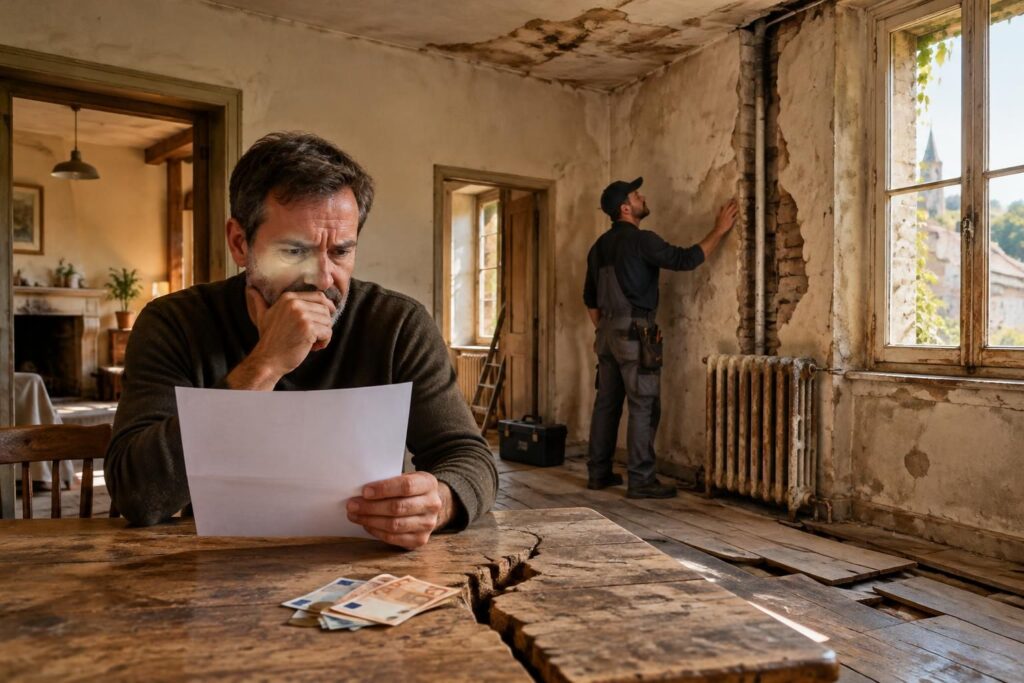
In an older house, money goes first toward making the building watertight, treating damp and tackling the hidden work, well before the finishing touches.
A renovation budget is more likely to hold up when it reflects the building’s actual condition, rather than the order of your wish list. Here’s how to identify the biggest expenses and set aside a contingency for unexpected costs.
Do these things without delay
- Have the roof, gutters and drainage checked before starting interior work.
- Look for signs of damp and find the cause before repainting or installing lining.
- Ask for itemised quotes, broken down by type of work, rather than a single total that is difficult to compare.
- Set aside 10 to 20% of the budget as a contingency if the condition of the utilities and walls is still uncertain.
- Put decorative finishes on hold until the structural and energy-efficiency work has been approved.
To avoid doing work in the wrong order, also see this guide to the order of work in an older house and this practical guide to pre-renovation inspections.
Older houses: where the renovation budget goes
A common trap is to cost the kitchen, floors and paint first. But a roof leak or rising damp can damage these finishes and mean they have to be redone.
The property inspections required when selling a home provide information on certain risks and systems. To decide what work is needed, you may also need a targeted technical assessment of the roof, structure, damp or building systems.
| Item | Indicative share of the budget | Why it takes up a large share |
|---|---|---|
| Roofing and water drainage | 15 to 30% | The cost of repairs depends on the roof covering, the structure and access to the work site. |
| Insulation and windows and doors | 15 to 30% | Choices need to take ventilation and the behaviour of older walls into account. |
| Heating and electrical systems | 10 to 25% | The cost varies depending on the condition of the systems and the equipment selected. |
| Damp and masonry | 10 to 25% | The source of the problem must be addressed before surface repairs are made. |
| Contingency for unexpected costs | 10 to 20% | It covers issues discovered after walls or floors are opened up. |
These ranges are guides, not a quote: items may overlap, and costs vary depending on the region, access and materials. Regular maintenance is often less expensive than repairs carried out after several years of neglect.
Why unexpected costs arise after work begins
A partition wall may conceal old wiring, a floor may reveal a weakened beam, and render may hide water ingress. These issues are not always visible during a simple walkthrough.
In Sophie’s case, the initial quote mainly covered a new bathroom. After a wall covering was removed, an old leak meant part of the floor had to be replaced: the budget changed because the cause had not been identified early enough.
The right approach is to cost out uncertainties before ordering the finishes. An additional inspection costs less than a halted project or having to replace a finished surface.
Insulation and heating: avoid work that cancels itself out
Replacing the heating system without reducing heat loss can lead you to buy equipment that is too powerful. Conversely, insulating without checking ventilation can encourage condensation in some homes.
So assess the building envelope, air intakes and outlets, and heating system together. In an older house, the insulation material and method must also account for how moisture is managed in the walls.
A simple assessment can help you weigh up your options: if the loft is very poorly insulated and the roof covering needs replacing, tackling both at the same time can reduce repeat work. An initial assessment helps you avoid choosing an appealing solution that is unsuitable for the building.
Three steps to see where the money is going
- Assess the condition of the building. List visible defects and have high-risk areas checked: the roof, damp, structure, building systems and ventilation. Separate urgent work from comfort upgrades.
- Put the work in the right order. Deal with water ingress and safety first, then the building envelope and systems, and finally the finishes. This sequence reduces the risk of paying twice for the same area.
- Compare quotes and set aside a contingency. Check the materials, quantities, exclusions and timelines. Keep some money in reserve for discoveries, especially if some areas have not yet been opened up.
The most reliable budget is not the most optimistic one: it separates essential work, comfort choices and uncertainties. This distinction helps protect what matters most while keeping spending under control.
Frequently asked questions about budgeting for an older house
How much should I set aside for unexpected costs?
A contingency of 10 to 20% is a prudent guideline when the condition of the building is still uncertain. It can be adjusted after inspections and the first areas of work have been opened up.
Should I start with insulation or heating?
First assess heat loss, ventilation and the condition of the building. Insulation and heating should be planned together to avoid incorrectly sized equipment or damp problems.
Are property inspections enough to plan the work?
No. They provide useful information, but they do not always replace a targeted technical assessment of the roof, structure, building systems or damp.
Which work should I postpone if my budget is tight?
Decorative finishes can generally wait. Prioritise safety, water ingress, damp-related problems and anything that could damage work already completed.
I hope you’ve found these tips helpful. See you soon! — Patrick