
Hi, Patrick here.
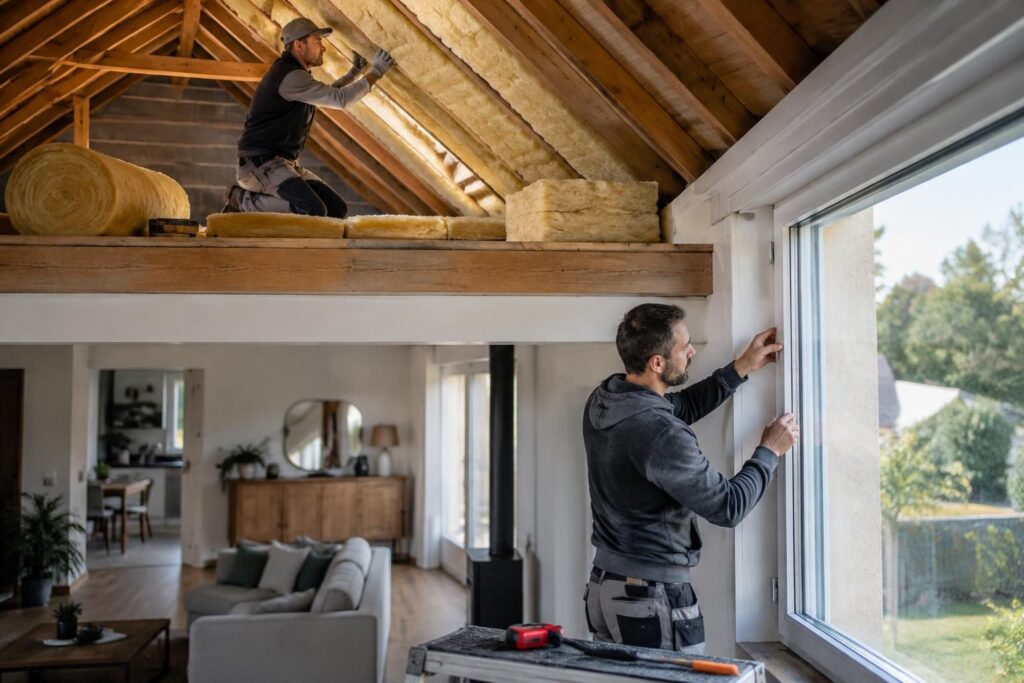
In most homes, prioritize insulating the attic before replacing the windows, unless they are in very poor condition or responsible for significant air leaks.
Heat often escapes more through a poorly insulated roof than through aging windows. But the right order for the work depends on the actual condition of your home, your budget, and your day-to-day comfort.
Things to do right away
- Look for drafts around windows, doors, and attic access hatches.
- Look for signs of damp: condensation on the windows, mold, or damp insulation.
- Check the roof insulation and its condition before planning any work.
- Make a note of uncomfortable rooms in both winter and summer, as well as temperature fluctuations.
- Request an assessment or energy audit if you are unsure which renovation work to prioritize.
To choose the right work, you can also consult this guide to deciding what to insulate first and these tips on the order of renovations in an older home.
Attic or windows: which should you prioritize in your home?
A poorly insulated roof can account for a significant share of heat loss, often estimated at around 25 to 30% in homes affected. Windows can also have a significant impact, especially if they do not close properly or have single glazing.
These estimates vary depending on the shape of the building, its airtightness, and the quality of its features. Insulating the attic is often a cost-effective project, but it cannot, on its own, fix windows that let in air or water.
| Situation observed | Work to consider first | Why |
|---|---|---|
| Attic poorly insulated or not insulated, windows in reasonable condition | Attic insulation | The roof can cause significant heat loss. |
| Single-glazed windows, drafts, and faulty closures | Window replacement or targeted repairs | The windows let in cold air and make the home less comfortable. |
| Both the attic and windows are in very poor condition | Energy audit, then an overall plan | A well-planned sequence helps avoid poorly coordinated work. |
So there is no automatic best choice: start by addressing the issue causing the most discomfort and heat loss, without neglecting ventilation.
If the attic is poorly insulated, start with the roof
When insulation is missing, compressed, or damp, insulating the attic is generally a good first project. It can limit heat loss in winter and reduce overheating under the roof in summer, provided the installation is suited to the home.
Before adding a layer of insulation, check the condition of the roof, ventilation, and for any signs of damp. Installing insulation over a damaged surface risks hiding the problem rather than solving it.
Nadia and Marc’s case
In their bungalow, the owners had planned to replace all the windows because they felt cold near the living room. An inspection of the attic revealed very thin, patchy insulation; they started by fixing that, then replaced only the oldest windows.
This approach allowed them to spread out the costs and address both causes without replacing windows that were still working. A simple assessment can help you avoid an unnecessary replacement.
If the windows are badly damaged, prioritize them
Windows that do not close properly, have damaged seals, or let in water should not be left until later just because the roof is often the priority. In this case, replacing the windows can quickly improve comfort and reduce drafts and water leaks.
Choose energy-efficient windows suited to the exterior wall and the way each room is used. Good energy performance also depends on installation: a poorly finished frame can leave thermal bridges and drafts.
However, be careful not to make the home too airtight without ensuring effective ventilation. After replacing the windows, air still needs to circulate to limit condensation and damp.
Three steps to decide which work to prioritize
- Observe and measure. Identify cold spots, air leaks, the condition of the attic, and any signs of damp. An infrared thermometer can help locate cold surfaces, but it is not a substitute for a professional assessment.
- Compare quotes and expected savings. Ask for proposals that specify the materials, installation method, and stated performance. Also check what financial assistance is available before signing.
- Plan the work in the right order. First address major roof or window problems, then check ventilation and airtightness. A well-planned energy renovation avoids improving one area at the expense of another.
Energy savings will depend on the home’s starting condition, heating system, and occupancy habits. The right goal is to improve comfort while addressing the main causes of heat loss, rather than choosing a feature simply because it seems more modern.
Attic or windows: answers to frequently asked questions
Should you always insulate the attic before replacing the windows?
No. This is often a good approach if the attic is poorly insulated and the windows are still in good condition. If the windows are badly damaged, let in water, or cause significant drafts, they may need to be prioritized.
Is replacing the windows enough to reduce heat loss?
It can improve comfort, especially with old or faulty windows, but it does not make up for a poorly insulated roof. You should also maintain adequate ventilation.
Is an energy audit useful before starting work?
Yes, especially if several areas need renovating. It helps you prioritize the work based on the building, your budget, and the savings you hope to achieve.
Can the work be done in stages?
Yes. A staged plan lets you spread out the costs, provided the work is coordinated and ventilation and airtightness are taken into account.
I hope you found these tips helpful. See you soon! — Patrick