
Hello, it’s Patrick.
To avoid getting stuck, don’t choose your insulation before checking for damp, ventilation, utility runs and the order of work.
Successful thermal insulation is planned for the home as a whole, not just in the building materials aisle. A decision made too early can make it harder to access cables, reduce living space or cause damp problems.
Things to do right away
- Look for signs of damp: marks, odours or blistering paint must be dealt with before insulating.
- Check the ventilation and plan to improve it if it is inadequate.
- Map out the utility runs for electrical, plumbing and heating systems that will pass through the walls.
- Compare internal and external insulation based on the façade, available space and the home’s constraints.
- Request an assessment before signing, especially if several projects are planned.
To avoid making a decision too soon, also read these tips on work to carry out before insulating and on preventing thermal bridging.
The pitfall: insulating before planning the rest
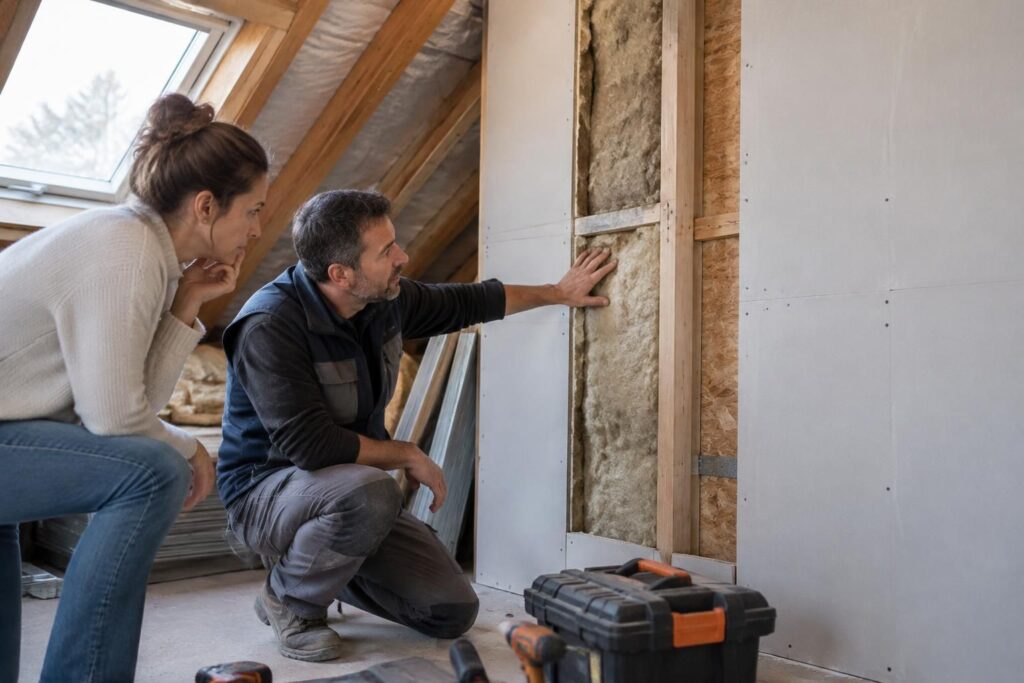
The wrong choice isn’t always an unsuitable insulation material. Often, it’s closing up a wall before planning the sockets, pipes, ventilation or repair of a leak. After that, every change means cutting into the wall lining and redoing some of the finishing work.
Imagine a homeowner having internal wall insulation installed before moving her radiators. The new location of the pipes means opening up the wall finish: she pays twice for some of the labour and risks damaging the airtightness. This renovation mistake can be avoided by planning the work carefully.
The rule to remember: first decide what needs to run behind, within or in front of the insulation. Then choose the materials, taking the substrate and desired energy performance into account.
Inside or outside: the right choice depends on the project
Internal insulation is often easier to schedule, but it reduces the room area slightly and requires careful coordination with utility runs. External insulation preserves more indoor space and limits some thermal bridges, but it may require permits and alter the appearance of the façade.
There is no one-size-fits-all solution. Professional advice can help check that the building, budget and planned work are compatible; this is what protects thermal comfort over the long term.
| Situation | What to check | Risk if you ignore it |
|---|---|---|
| Internal insulation | Utility runs, sockets, radiators and loss of floor space | Opening up the wall lining and redoing the finishes |
| External insulation | Façade, roof overhangs and planning regulations | Project delays or changes |
| Damp or damaged wall | Source of the water and condition of the substrate | Damp trapped behind the insulation |
| Poorly ventilated home | Airflow rates and how the equipment operates | Condensation and indoor discomfort |
Three steps to stay in control of your project
- Assess the home. Inspect the walls, windows and doors, roof and ventilation. Note any visible defects and have questionable areas checked before covering them up.
- Plan the order of work. Schedule repairs first, then utility runs and ventilation, and finally the insulation and finishing work. This sequence avoids having to dismantle newly completed work.
- Approve the complete system. Ask for details about the insulation, facing, moisture control and treatment of joints. Compare compatible solutions, not just the price per square metre.
Effective energy-efficient renovation is about more than adding a layer of insulation. It’s the compatibility of the substrate, installation and equipment that prevents unwelcome surprises.
Useful questions to ask before choosing insulation
Can you insulate a wall with signs of damp?
First, you need to identify and deal with the cause of the damp. Covering the wall without an assessment can trap water and damage the materials.
Should ventilation be planned before insulation work?
Yes. A better-insulated building envelope requires suitable ventilation to refresh the air and limit condensation. Check that it is working before closing up the walls.
Does internal insulation always prevent future work?
No, but it can make utility runs harder to access and slightly reduce the room area. Identify the equipment and its future locations before installation.
Which professional should you consult before choosing insulation?
A qualified contractor or an energy-efficiency renovation specialist can assess the building, installation constraints and ventilation, then recommend a system suited to the project.
I hope you found these tips useful. See you soon! — Patrick