
Hello, this is Patrick.
A poorly insulated roof drives up energy bills: improving its insulation is often one of the most effective ways to reduce heat loss.
Heat escapes through the roof, especially when the attic is poorly insulated or not insulated at all. So before replacing the windows or heating system, check the condition of this area: a well-planned energy renovation starts with the biggest sources of heat loss.
What to do right away
- Inspect the attic: look for areas with no insulation, compressed insulation, or dampness.
- Check the ventilation: the insulation must not block the airflow designed for beneath the roof.
- Look for signs of damp: any leak or condensation must be dealt with before insulating.
- Compare several quotes, asking for details about the materials, installation, and finishing.
- Find out about available grants before signing off on the work.
To plan your project, also see the work to plan before insulating and these tips for avoiding thermal bridges when insulating.
The pitfall of a poorly insulated roof: paying for heat that goes to waste
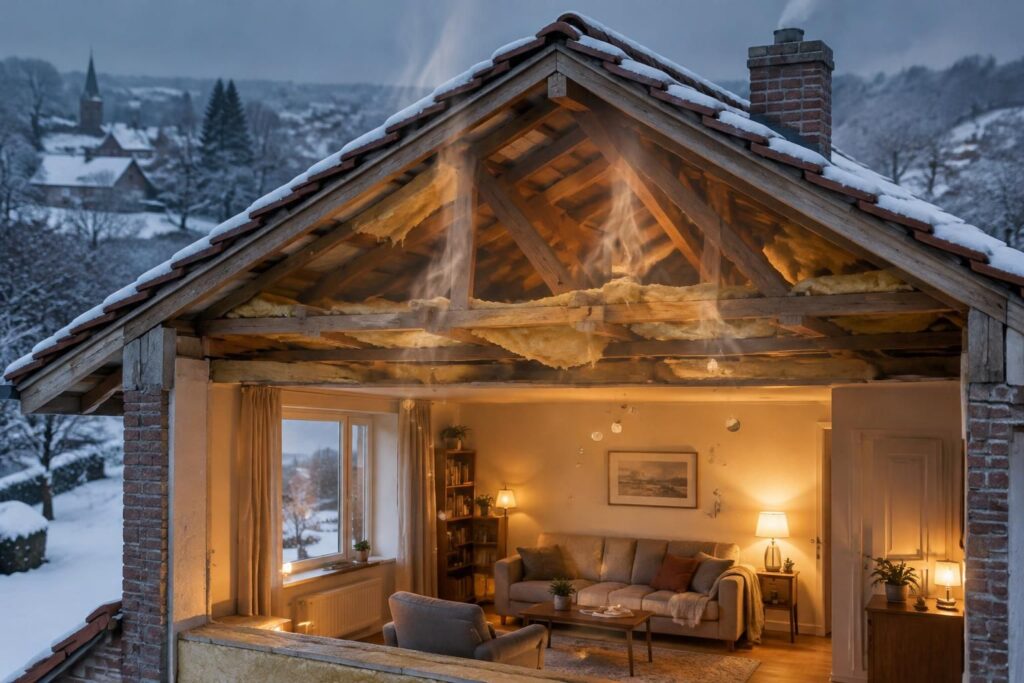
When warm air rises and meets a poorly insulated roof, it escapes outside. The heating system then compensates for this loss without improving the comfort of the rooms in the long term.
Depending on the house and its condition, the roof can account for a significant share of heat loss, sometimes around 25 to 30%. This estimate varies according to ventilation, walls, windows, and the quality of the building envelope: an assessment is more reliable than a general estimate.
Effective attic insulation starts with an inspection
In a house, damp or compressed insulation provides less protection than material that has been installed properly. Adding a new layer without investigating the cause of the damp can conceal the problem and compromise the renovation work.
For example, if a leak has soaked the insulation, the roof covering must be repaired first and the area left to dry. Insulating over a damaged surface could turn hoped-for savings into an additional expense.
Roof insulation: choosing the right project
The choice depends on access to the attic, how it is used, and the condition of the roof covering. Easily accessible unconverted attics are often well suited to insulation at floor level; if the attic is converted, insulating beneath the roof slopes or from the outside may be more appropriate.
These solutions do not have the same cost or involve the same constraints. External insulation preserves more of the interior space, but requires more extensive work on the roof; internal insulation is generally less disruptive, but may slightly reduce the available space.
| Configuration | Solution to consider | Key consideration |
|---|---|---|
| Accessible unconverted attic | Insulation at attic floor level | Do not obstruct ventilation or necessary access points |
| Converted attic | Insulation beneath the roof slopes | Ensure continuous installation and carefully seal the joints |
| Complete roof replacement | External insulation | Coordinate insulation, waterproofing, and roofing work |
To make a decision without being guided by price alone, compare the proposed thermal resistance, the quality of the installation, and its compatibility with the roof. Effective insulation is a coherent system, not just a thickness of material.
Three steps to reduce heat loss
- Have the roof and attic inspected. A professional can identify leaks, damp problems, ventilation issues, and poorly insulated areas.
- Choose a method suited to how the attic is used. Request several comparable quotes that include the insulation specifications and how joints will be treated.
- Check the installation plan and available grants before work begins. Confirm the eligibility criteria currently in effect and ask for the required supporting documents before signing.
This approach helps you avoid replacing a heating system while heat continues to escape through the roof. Once the building envelope has been improved, the heating system can operate more efficiently and energy savings become more achievable.
Frequently asked questions about roof insulation
How can I tell if my roof is poorly insulated?
A cold attic in winter, uneven temperatures between rooms, or insulation that is compressed and damp may be warning signs. An attic inspection and, if necessary, an assessment can confirm any problems.
Should I insulate the attic before replacing the windows?
It depends on the overall condition of the house, but a very poorly insulated roof often deserves priority attention. An assessment can help prioritize the work based on heat loss and budget.
Can I add insulation on top of the insulation already in place?
This is sometimes possible if the existing insulation is dry, clean, and in good condition. Its compatibility, ventilation, and joints should be checked before adding another layer.
Does roof insulation always reduce energy bills?
It can reduce heating needs if the work is appropriate and properly carried out. The results also depend on the building, ventilation, heating habits, and other sources of heat loss.
Thanks for reading! I’d love to hear your thoughts in the comments. — Patrick