
Hello, Patrick here. If your walls feel cold, start by identifying areas where heat is escaping and checking for damp before choosing wall insulation.
A cold wall doesn’t always mean poor insulation: a draught, a thermal bridge or damp could also be the cause. A thermal assessment helps identify which work should come first and avoid costly work in the wrong place.
What to do right away
- Identify cold spots by comparing the walls, corners and areas around the windows.
- Look for signs of damp: stains, a musty smell, blistering paint or condensation.
- Check for draughts around outlets, skirting boards and window and door frames.
- Make a note of the rooms affected and when they feel coldest.
- Don’t install insulation on a damp wall before identifying and addressing the cause.
Before starting work, check what work to do before insulating and find out how to limit thermal bridges during the work. These two checks help you choose a lasting solution rather than just hide the symptoms.
Cold walls: the mistake to avoid before insulating
A wall may feel cold because it is poorly insulated, but the cause could also be an air leak or a thermal bridge where the wall meets the floor. Adding a layer of insulation without first assessing the problem could shift it elsewhere and make damp in the walls worse.
For example, in a bedroom where the outside wall feels cold and there are black marks in a corner, first check the ventilation and look for water ingress. Internal insulation must not trap damp inside the wall.
Choosing the right first step
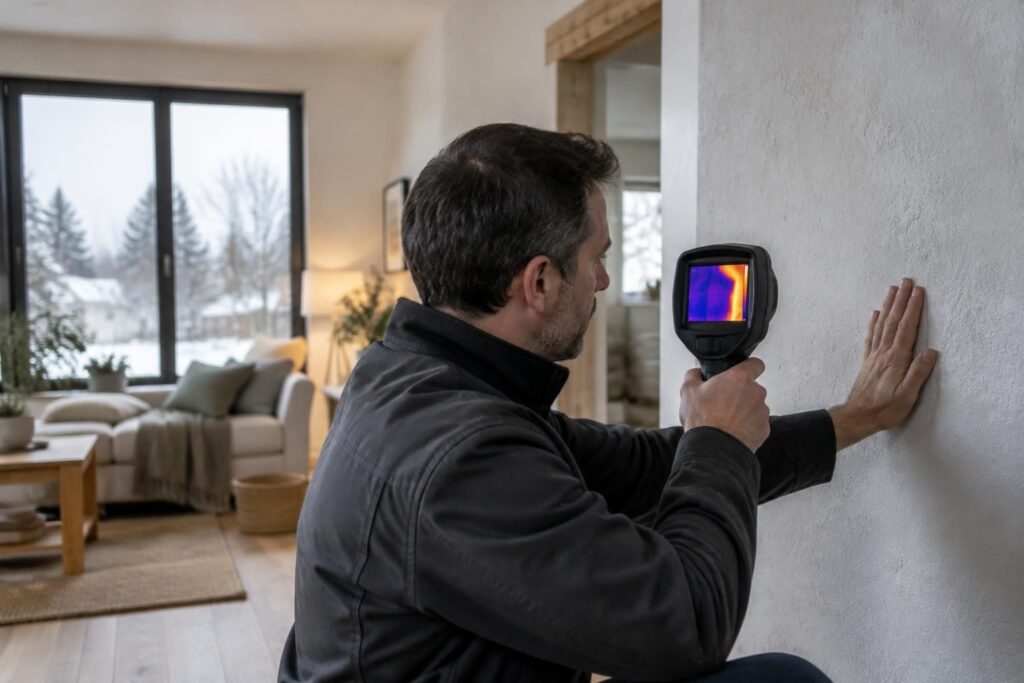
A thermal assessment, carried out by a professional or using a thermal camera in suitable conditions, can help distinguish a uniformly cold wall from a localized cold spot. A one-off measurement may not be enough: you also need to look at how the room is used, its ventilation and the condition of the wall.
| What you notice | Possible cause | Priority |
|---|---|---|
| Wall feels cold across its entire surface | Insufficient insulation | Assess the wall insulation |
| Very cold corner or cold strip | Thermal bridge | Address the affected junction |
| Stains, blistering or a musty smell | Damp or inadequate ventilation | Identify the source before insulating |
| Feeling of a draught | Air leak | Check seals and service penetrations |
Internal or external insulation: which should you choose?
Internal insulation is often easier to arrange room by room, but it slightly reduces the usable floor area and needs to be carefully installed around outlets and windows. External insulation addresses some thermal bridges more effectively and preserves indoor space, but it involves work on the façade and may be subject to planning restrictions.
The right choice depends on the condition of the building, access to the façades, your budget and any other planned work. If the roof or attic is very poorly insulated, it may sometimes be worth addressing that first: the order of work should take all heat loss into account, not just the wall that feels coldest.
The three-step approach
- Assess the problem. Identify cold spots, check for damp and inspect the ventilation. If you suspect water ingress or persistent mould, have the wall inspected before covering it.
- Compare the options. Assess internal and external insulation based on the building, any constraints and other energy-efficiency renovation work. Ask for quotes that detail the connections and how thermal bridges will be addressed.
- Do the work in the right order. First address the causes of damp and air leaks, then install the insulation with suitable ventilation. Afterwards, check the areas that were coldest.
The right approach: don’t choose the insulation material before you understand why the wall feels cold. A thorough assessment makes it easier to prioritize the work and reduces the risk of having to redo it.
Frequently asked questions about cold walls
Does a cold wall always mean it is poorly insulated?
No. A thermal bridge, a draught or damp can also cause this sensation. You should look at the entire wall and its surroundings before deciding what work to do.
Should you insulate a wall with signs of damp?
Not before identifying and addressing the cause. A leak, rising damp or inadequate ventilation may need to be dealt with first.
What type of insulation should you choose for cold walls?
Either internal or external insulation may be suitable. The choice depends on the condition of the building, façade constraints, available space and how thermal bridges will be addressed.
How can you identify a thermal bridge without a camera?
Look at corners, wall-to-floor junctions and the edges of windows. Localized cold spots or condensation can help guide the assessment, but if you’re still unsure, they’re no substitute for a professional inspection.
I hope you’ve found these tips helpful. See you soon! — Patrick