
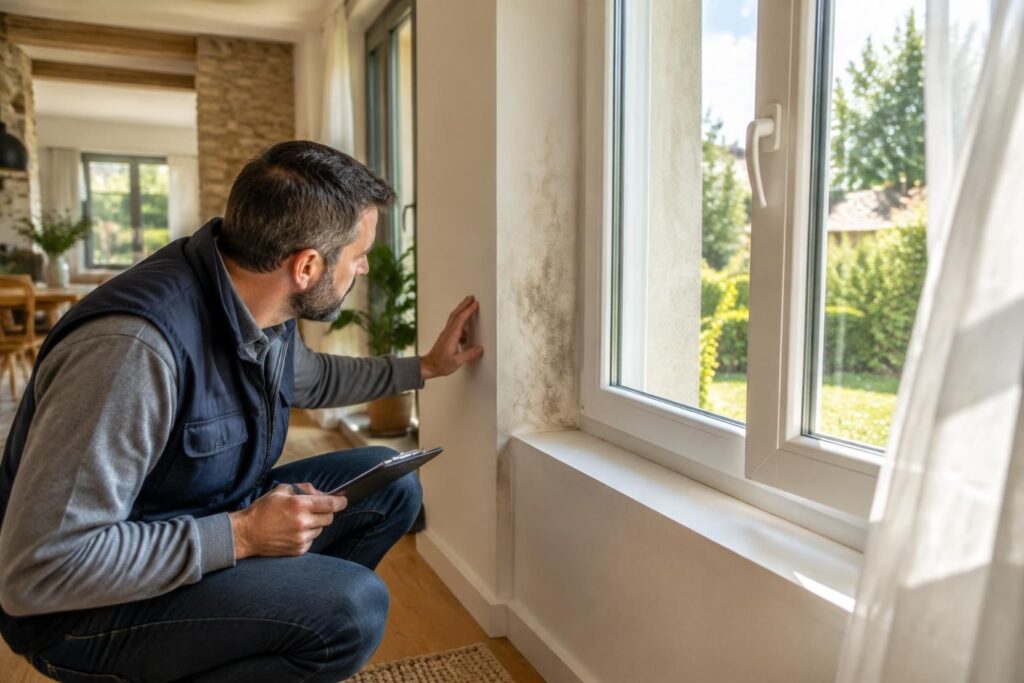
Hi DIYers, Patrick here. Short answer: natural ventilation can work if it is designed and checked, but relying on leaks or opening windows at random after insulating can be costly. In an energy renovation, you need to maintain air renewal while limiting heat loss. The right choice depends on the home, how airtight it is, and its humidity levels.
Natural ventilation after an energy renovation: the right approach
What to do right away
- Look for signs of damp: persistent condensation, odors, or dark marks.
- Have the air inlets and existing ducts checked.
- Before insulating, ask for an assessment of the home’s ventilation.
- Don’t block vents to get rid of a draft.
- Compare an organized natural ventilation solution with mechanical ventilation.
To avoid oversights that can compromise the project, also check out these tips on neglected ventilation during renovations and on ways to improve ventilation without wasting energy.
Natural ventilation uses air inlets, ducts, and sometimes the stack effect to remove stale air. It can work in a suitable home, but its effectiveness varies with the wind, temperature, and occupants’ habits. After thermal insulation, it should never rely on uncontrolled leaks.
Natural ventilation or MVHR: how do you choose?
An older home may have well-positioned ducts and openings that allow air to circulate properly. In that case, a natural solution can be considered, provided air enters the living areas and leaves through the damp rooms. Opening a window now and then is no substitute for a system designed to ensure regular air renewal.
When a home becomes more airtight after renovation, mechanical ventilation provides a more consistent airflow. A single-flow MVHR system is often easier to install; a double-flow system can recover some of the heat, but whether it is worthwhile depends on the building, the budget, and the quality of installation. The assessment should guide the choice—not the promise of savings alone.
| Home conditions | Option to consider | Point to watch |
|---|---|---|
| Functional ducts and verified airflow | Organized natural ventilation | Check the draft and air inlets |
| Renovated home that has become very airtight | Single-flow or double-flow MVHR | Size the system to suit the home |
| Condensation, odors, or damp marks | Assessment before modifying openings | Identify the cause before masking the symptoms |
If it’s a home that isn’t very airtight and has ducts in good condition, have an organized natural ventilation system assessed. If it’s a highly insulated home or one prone to damp, consider a suitable MVHR system before closing off the remaining air inlets.
Thermal insulation and damp: avoid a costly mistake
Thermal insulation reduces heat loss, but it also changes how air moves through the building. If moist air remains in the rooms, condensation can form on cold surfaces and encourage mold. This is a common renovation mistake: insulating without checking how air gets in and out.
An audit or targeted assessment can help identify building defects, blocked ducts, and missing air inlets. It can also distinguish a ventilation problem from water ingress or rising damp. Addressing the cause prevents you from having to redo the finishes a few months later.
In a 1970s house, a homeowner had high-performance insulation installed without checking the exhaust vents. Condensation built up in the bathroom; an inspection revealed a clogged duct, and cleaning it solved the problem without replacing the insulation.
Three steps to choosing suitable ventilation
- Step 1: observe. Note which rooms seem stuffy, when condensation occurs, and whether odors persist. Also check the vents and ducts without blocking them or taking them apart at random.
- Step 2: get an assessment. Ask a professional to check that the ventilation is working and inspect the building envelope. The findings should specify useful improvements and installation constraints.
- Step 3: coordinate the work. Plan insulation, airtightness, and ventilation together, then have the airflow rates and operation checked after commissioning.
“A well-insulated home also needs to breathe well.” This simple rule helps avoid confusing energy savings with eliminating all air circulation. Well-managed ventilation protects comfort, the building, and indoor air quality.
Checks to plan before and after the work
Before work begins, ask for a quote that clearly itemizes the air inlets, ducts, equipment, and adjustments. After installation, check that the vents are not blocked or excessively noisy and that air is circulating as intended. Performance often depends just as much on the finishing work as on the equipment chosen.
- Check that air inlets are provided throughout the living areas.
- Make sure extraction is provided in the kitchen and wet rooms.
- Don’t seal off a vent without first considering a replacement solution.
- Clean the vents and filters according to the manufacturer’s recommendations.
Natural ventilation is therefore not automatically a bad option. It becomes risky when it is improvised, undersized, or incompatible with an envelope that has become airtight; the right system is one that provides a steady airflow without causing unnecessary heat loss.
Is natural ventilation enough after insulation?
Sometimes, if the ducts, air inlets, and draft are suitable and have been checked. However, a home that has been made more airtight may need mechanical ventilation.
Can you block vents to get rid of drafts?
No, not without an assessment and a replacement solution. Blocking them can reduce air renewal and encourage damp or mold.
What signs indicate inadequate ventilation?
Persistent condensation, lingering odors, or signs of mold are warning signs to investigate. They can also have other causes: an assessment helps distinguish them.
Is a double-flow MVHR system always the best choice?
No. Whether it is worthwhile depends on the home’s layout, the budget, possible maintenance, and the quality of the installation. An assessment beforehand helps compare the options.
Thanks for reading this far; Patrick