
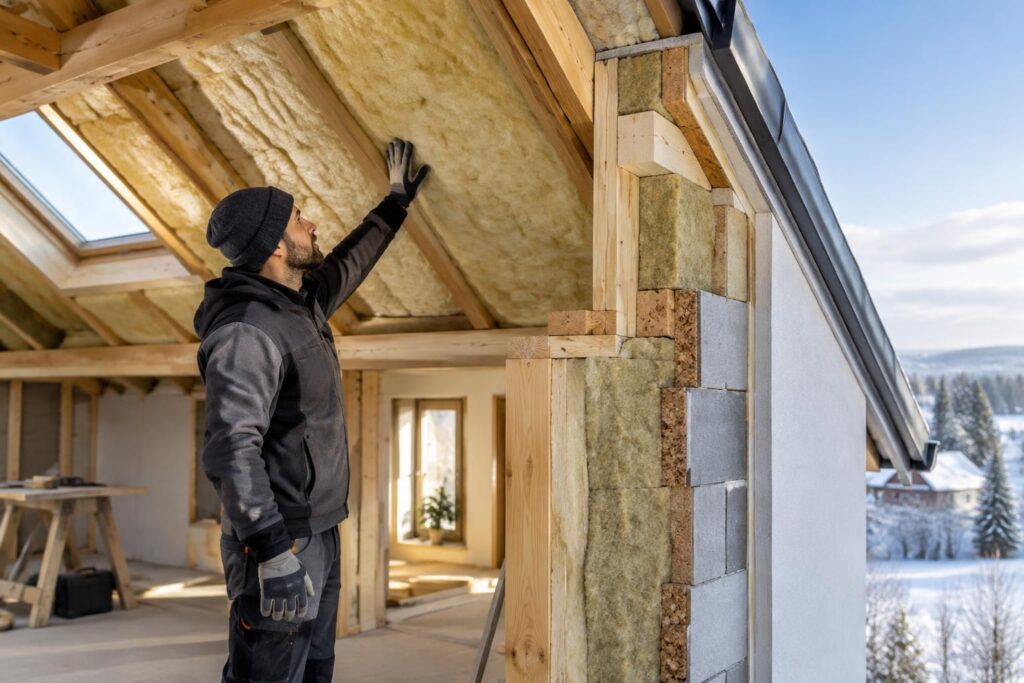
Hello, Patrick here. To avoid regrettable work, start with the attic or roof if their insulation is poor, then tackle the walls and ground floors based on your home’s assessment. The right priority also depends on moisture, the condition of the roof frame, and your renovation plans. An energy audit helps you choose the right order rather than insulating at random.
What to do without delay
- Identify cold areas: ceilings, exterior walls, floors, and joints between surfaces.
- Check the roof: a leak or damaged roof frame must be dealt with before insulation.
- Request an energy audit if you’re unsure which areas to tackle first.
- Compare quotes by checking the materials, thickness, and how thermal bridges will be addressed.
- Plan for ventilation: a better-insulated home also needs to renew its air properly.
Before deciding, understand why the work to be done before insulation can change the order of the project and how to avoid thermal bridges during insulation. These two checks help prevent costly rework and protect thermal comfort.
The right order for insulating without regrets
A common mistake is to choose the most visible area or the cheapest quote. However, effective insulation depends on the entire building envelope: insulating a wall without treating its joints can let cold air in around floors or windows.
In a poorly insulated home, much of the heat often escapes through the roof. Insulating an unconverted attic is then a priority, provided the roof covering is in good condition and moisture is under control.
| Area | Prioritize when… | Point to watch |
|---|---|---|
| Attic or roof | The ceiling is cold and insulation is missing or deteriorated. | Check the roof covering, roof frame, and ventilation. |
| Walls | Exterior walls remain cold even after the attic has been insulated. | Address thermal bridges and check for moisture. |
| Ground floors | The floor is cold, particularly above a garage or cellar. | Check access and the clearance beneath the floor. |
Attic, walls, or ground floors: choose based on your home
Attic insulation is often the first step when the attic is accessible and the roof is in good condition. If the attic is converted, roof insulation can be more complex and should be coordinated with roofing work.
Wall insulation becomes a priority if the exterior walls are very cold or if exterior renovation is already planned. Ground floors deserve particular attention when the ground floor is above an unheated space: the benefits are then as much about thermal comfort as energy performance.
Heat-loss percentages vary depending on the building, its exposure, and its condition. A home with walls that are already insulated will therefore not follow the same order as one whose attic has never been renovated.
The pitfall to avoid before starting the work
Insulating a damp wall or a defective roof can trap the problem instead of solving it. Before work begins, have leaks, rising damp, and ventilation defects investigated.
Another often-overlooked point is the connections between walls, the roof, windows, and floors. These areas can create thermal bridges, resulting in cold surfaces and sometimes condensation. A good quote specifies how these joints will be treated.
A real-life example: at Léa and Marc’s home, the living room ceiling was freezing, but a damp patch had also appeared near an exterior wall. They had the roof covering checked before insulating the attic, then scheduled the wall insulation. The result: a well-planned project, without having to remove insulation that had been installed too soon.
A simple three-step process
- Assess the current condition. Note cold areas, visible defects, and work already completed. If the home has several weaknesses, an energy audit can help establish a suitable work priority.
- Address problems before insulating. Repair leaks, check the roof frame, and make sure ventilation is adequate. This step prevents a defect from being hidden beneath new insulation.
- Schedule the work in the right order. Start with the roof or attic when appropriate, then compare wall insulation with ground-floor insulation. Ask for details on how joints will be treated and what performance to expect.
The final choice therefore doesn’t follow a single rule. It takes into account the condition of the home, how the rooms are used, and any work already planned: this is what makes an energy renovation sustainable.
Frequently asked questions about prioritizing insulation work
Should you always start with attic insulation?
No. It is often a priority if the attic is poorly insulated and the roof is in good condition, but moisture problems or a roof that needs repairs must be dealt with first.
When should you insulate the walls rather than the ground floors?
Walls take priority if the exterior walls are very cold or their renovation is already planned. Ground floors are important when the floor is above a cellar, crawl space, or unheated garage.
Is an energy audit useful before work begins?
Yes, especially if several areas need attention. It helps compare the expected benefits and prioritize the work based on the characteristics of the home.
Why address thermal bridges?
They are often found at the joints between surfaces and can reduce the effectiveness of insulation. Addressing them improves comfort and limits cold surfaces that could encourage condensation.
Thanks for reading! If this topic resonates with you, share your experience in the comments. — Patrick