
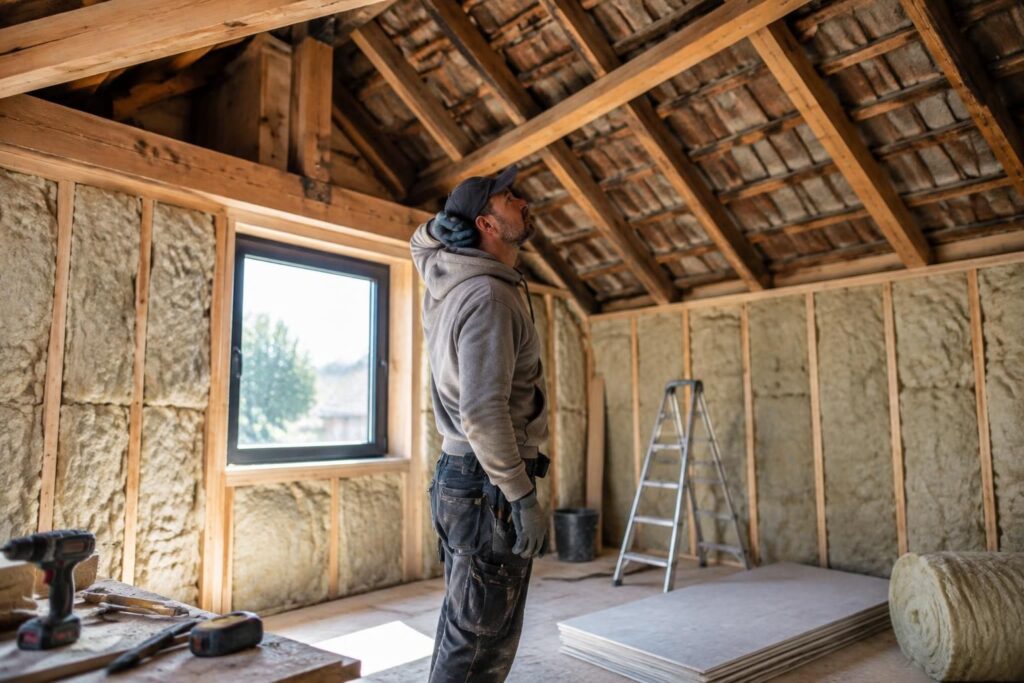
Hello, it’s Patrick. Insulating the walls first can be a real mistake if the roof or attic remains poorly insulated. The order of work depends on heat loss, the condition of the home, and the work planned. Before deciding, it’s better to identify the priorities rather than follow a one-size-fits-all rule.
Things to do right away
- Identify cold spots: note drafts, cold surfaces, and signs of damp.
- Check the attic and roof: degraded insulation can allow a lot of heat to escape.
- Get an assessment: an energy audit or assessment can help you prioritize the work.
- Check the ventilation: improving airtightness without ensuring air renewal can encourage condensation.
- Plan for the finishing work: windows, cables, radiators, and utility runs can affect the project.
To compare priorities, also check out this choice between the roof and walls and these tips on insulating the attic before the walls. These guidelines help you avoid confusing the most visible surface with the one causing the greatest heat loss.
Why wall insulation isn’t always the first step
Wall insulation improves comfort and energy efficiency, but it can’t make up for a roof that lets heat escape. In a house with a poorly insulated attic, treating the vertical walls first could therefore delay the most urgent work.
This isn’t an absolute rule: very cold, damp, or damaged walls may become the priority. The right decision comes from an overall assessment that takes heat loss, damp, and the available budget into account.
A common mistake: choosing work based on how visible it is
Walls are visible, and transforming them seems tangible. Yet insulating the roof or attic may be simpler and can quickly reduce heat loss, especially if the space beneath the roof is accessible.
Consider a house with an unheated attic and walls in reasonable condition. If the insulation on the attic floor is missing or compressed, starting with the walls could use up the budget without addressing the most obvious source of heat loss. Priorities should be based on the home’s needs, not on a universal order.
Compare priorities before signing a quote
The table below offers some simple guidelines. It doesn’t replace an on-site inspection: the condition of the building and the layout of the house can change the order of work.
| Situation observed | Priority to consider | Point to watch |
|---|---|---|
| Poorly insulated and accessible attic | Attic or roof insulation | Check the ventilation and the condition of the roof covering |
| Cold walls or noticeable discomfort near the walls | Wall insulation | Address thermal bridges and damp |
| Water marks or condensation | Find the cause before insulating | Don’t trap damp behind insulation |
| Several poorly insulated areas | Plan a whole-home energy renovation | Coordinate the different trades and finishing work |
How to choose the order of work without making a mistake
Renovation mistakes often cost time rather than resulting from the wrong material. For example, insulating a wall before replacing a window or redoing utility runs can mean reopening finished surfaces and making the project more complicated.
Useful insulation advice should therefore consider the home as a whole: the building envelope, ventilation, heating, and damp. This approach helps deliver lasting energy savings rather than an isolated improvement to a single surface.
A three-step process
- Identify heat loss and problems. Look at cold rooms, the attic, walls, and signs of damp. If possible, get an assessment suited to the home.
- Rank the work by urgency. First address defects that damage the building or cause the greatest heat loss, then coordinate insulation, ventilation, and heating.
- Compare like-for-like quotes. Check the materials, areas, installation details, and finishing work. Ask how the contractor will limit thermal bridges and manage ventilation.
A well-planned sequence avoids redoing the finishing work and makes the renovation more effective. It’s also the best way to maintain comfort after the work is done.
Questions to ask before insulating the walls
Should you always insulate the attic before the walls?
No. The attic is often the priority when it is poorly insulated and accessible, but severely damaged walls or walls causing significant discomfort may come first. An assessment can help you decide.
Is insulating the walls first necessarily a mistake?
No. It becomes a mistake if other significant heat losses or damp problems are ignored. The order depends on the condition of the home and how the work is coordinated.
Why check the ventilation before starting work?
Improved insulation reduces unwanted air exchange. Without suitable ventilation, indoor moisture can build up and cause condensation.
How can you tell which surface lets the most heat escape?
A professional can inspect the building, its equipment, and its defects, then provide an assessment. Feeling cold alone isn’t enough to establish priorities.
I hope you’ve found these tips helpful. See you soon! — Patrick