
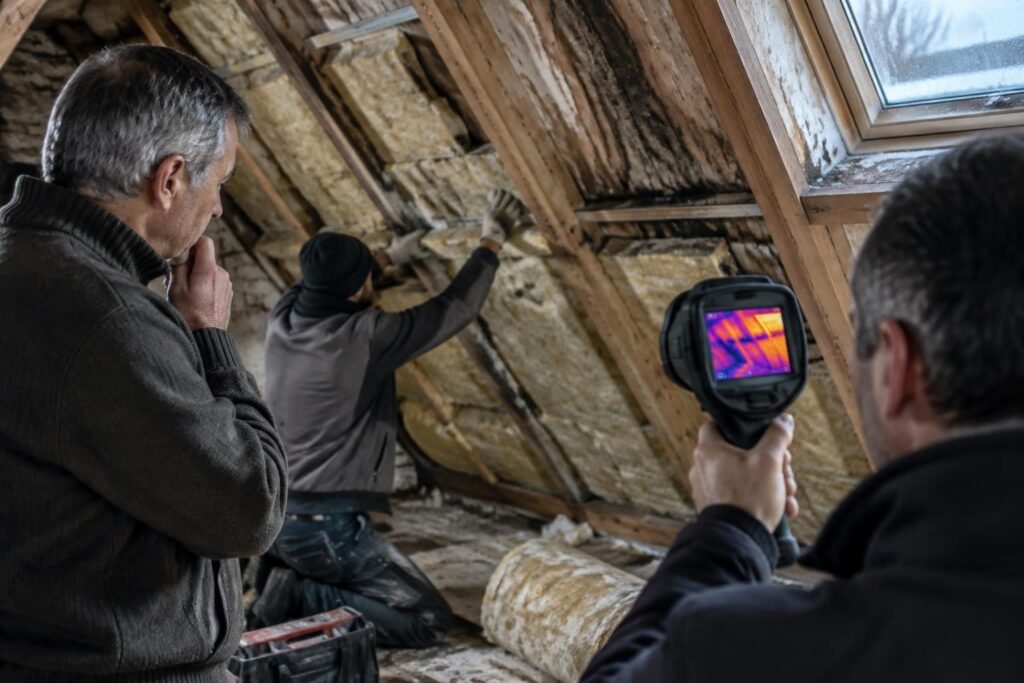
Hi DIYers, Patrick here. Insulating without an assessment can be costly for little benefit: first identify where heat is escaping, then tackle the priority areas in the right order. Effective insulation depends on the condition of the home, its ventilation and thermal bridges, not just the choice of material. A thermal assessment or energy audit helps turn the work into a worthwhile investment and improve thermal comfort.
Do this right away
- Identify cold rooms, drafts and signs of damp.
- Check the condition of the walls, loft and windows before buying materials.
- Ask for an independent opinion if you don’t know where the heat is escaping.
- Compare two or three detailed quotes if the work goes beyond simple DIY.
- Check the grants and their conditions before signing a quote.
To avoid paying for poorly targeted work, also read these tips on the risks of a project without an assessment and the order of work before insulation.
Insulating without an assessment: why the benefits can be misleading
Installing insulation on the first wall you come to may seem quick. Yet if air is getting in through the windows, the loft is poorly insulated or a thermal bridge remains untreated, some of the effort will be wasted.
In a house built before 1974, walls can account for around 31% of heat loss and air leaks for nearly 27%, according to ADEME estimates. These figures vary from one home to another: above all, they show why an assessment is better than buying materials at random.
A thermal assessment identifies priorities
A thermal assessment helps identify cold spots, air leaks and insulation defects. An energy audit goes further: it proposes a coherent plan of work, with an estimate of the benefits and possible stages.
This check also helps prevent a damp problem from being concealed behind new wall lining. If air does not circulate properly, improving insulation without considering ventilation can reduce comfort instead of improving it.
Areas to check before choosing insulation
Start by inspecting the home: mold, persistent odors and damp walls are warning signs to address before closing up a wall. Next, check airtightness and the condition of the roof. Insulating an unconverted loft can often offer good value for money, depending on its accessibility and condition.
Low-cost materials, such as glass wool or loose-fill cellulose, may be suitable. However, the choice depends on the area to be insulated, the available thickness and the constraints of the building: a low price does not make up for unsuitable installation.
| Area to check | What to look for | Useful next step |
|---|---|---|
| Walls | Cold surfaces, signs of damp, vulnerable corners | Identify thermal bridges before adding wall lining |
| Loft | Missing, compressed or discontinuous insulation | Check the condition of the surface and ventilation |
| Windows and doors | Drafts around windows and doors | Identify leaks before replacing the windows and doors |
| Ventilation | Condensation, odors, stale air | Check that the air is being renewed |
In an old house, a homeowner planned to install insulation in a cold bedroom. An inspection revealed an air leak around a window and insufficient ventilation: the assessment changed the order of the work and prevented a damp wall from being sealed up.
Three steps to insulate without wasting money
Step 1: Walk around the home on a cold day. Note uncomfortable rooms, drafts, damp areas and the visible condition of the loft.
Step 2: Get an assessment or audit if several areas need attention. Then ask for quotes that specify the areas, materials, installation, treatment of thermal bridges and any related work.
Step 3: Check the qualifications and grants before signing. For grants that require it, the company must have an RGE qualification appropriate to the work; confirm the criteria with a France Rénov’ advisor.
“The right project starts with the right question: where is the heat escaping?” A detailed quote should answer this question clearly before promising energy savings.
Two straightforward situations to distinguish
If you mainly feel drafts, start by locating the leaks and checking the ventilation before adding another layer of insulation. If the surfaces are cold and the loft is already insulated, have the walls and thermal bridges assessed before choosing a solution.
A whole-home project can be more cost-effective than isolated work
Addressing just one area can improve a room, but it does not guarantee a significant increase in the energy performance of the whole home. For a thermal renovation, insulation, ventilation and heating should be considered together, especially if several areas are underperforming.
Grant rules change. Under the schemes in force from September 1, 2026, MaPrimeRénov’ no longer funds insulation alone and reserves funding for certain major renovation projects, subject to conditions concerning the home and energy savings. Energy grants may support individual projects; the zero-interest eco-loan and reduced VAT may also apply depending on the application. Always check the current criteria before committing.
Ask for several quotes and be wary of an offer that requires an immediate signature or promises free work without explaining the conditions. The right choice is not necessarily the cheapest quote: it is the one that describes a suitable solution and a plausible result.
Frequently asked questions about insulation without an assessment
Can you insulate your home yourself without getting an assessment?
Yes, for some simple jobs, provided you know the condition of the surface and do not conceal any damp. If several areas are involved or the home has defects, an assessment helps target the work.
Which area should you check first?
Check the loft, walls, windows and doors, and air leaks. The priority depends on the home; an energy audit helps compare heat losses rather than choosing at random.
Does adding more insulation always improve thermal comfort?
Not necessarily. Poorly installed insulation, persistent thermal bridges or insufficient ventilation can limit the benefits and encourage damp.
When should you apply for financial assistance?
Check the conditions and submit any required applications before signing the quote or starting the work. The rules vary depending on the scheme and type of project.
Thanks for reading this far; Patrick