
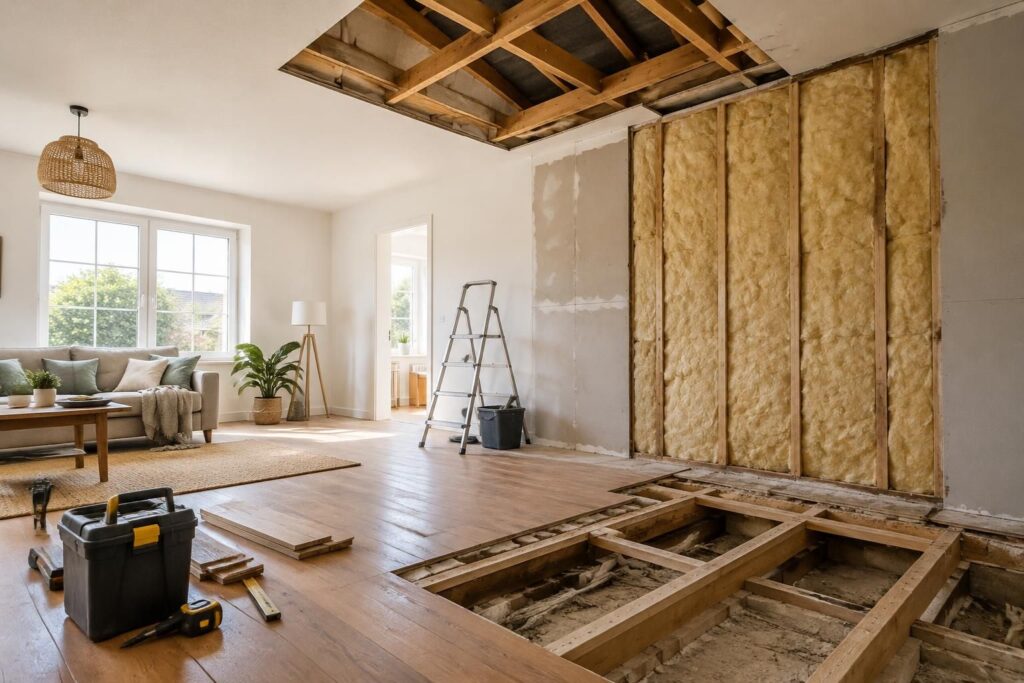
Hi, craftspeople, Patrick here. Prioritize the roof first if it leaks or doesn’t provide adequate protection, then the windows and wall insulation, and finish with the flooring. The order depends on the condition of the house: secure the building envelope before renovating the interior. For an easier renovation, start by identifying the damage, then plan the work from the heaviest to the most detailed tasks.
Do this right away: renovation priorities
Starting today, check for leaks, inspect the walls, and look for drafts near the windows. To decide on the order of the work, also compare these guides on the sequence for roofs, windows, and walls and the order of work in a renovation.
- Look for leaks and displaced tiles from outside, without climbing onto the roof.
- Make a note of signs of damp, mold, and cracks that need to be inspected.
- Check the windows: damaged seals, condensation, or a feeling of cold near the glass.
- Get an assessment and quotes before setting your renovation budget.
- Protect interior surfaces and postpone finishing work until the major work is complete.
Roof, walls, floor: what order should you choose?
The rule is simple: make the house watertight before insulating or renovating the rooms. A leaking roof can damage insulation, ceilings, and newly installed finishes. If the roof covering is in good condition, then inspect the windows and walls, and leave the flooring until last.
Thermal insulation for the roof or attic is often a priority, because heat escapes through the upper parts of a poorly insulated home. After the roof, address the openings and wall insulation, taking ventilation and damp into account. Flooring generally comes after messy work, unless it is damp, unstable, or very cold.
“Never cover up something you’ll have to open up again.” This rule helps avoid breaking a freshly painted partition or damaging a new parquet floor to run a cable or repair a leak.
| Area | Prioritize it if… | Recommended order |
|---|---|---|
| Roof | There is a leak, damaged tiles, or a roof structure that needs checking. | Assessment, repairs, then insulation. |
| Windows and walls | Air is getting in through the openings or the walls are poorly insulated. | Coordinate window installation with wall insulation. |
| Floor | The floor is damp, damaged, or very uncomfortable. | Address the cause, then install the flooring after dusty work is complete. |
As a general rule, remember: roof first, walls next, floor last. But a damp floor or a facade that lets water in can change the renovation priorities: an assessment matters more than blindly following a rule.
Two situations to distinguish
If the roof is leaking, have the roof covering repaired before insulating the walls or renovating the floors. If the roof is in good condition but the home is still cold, have the attic, windows, and walls assessed before deciding what work to do.
A three-step process for planning the work
- Step 1: inspect and assess. Have the roof covering, damp, ventilation, and condition of the walls checked. In an older home, also find out which assessments are required before demolishing or sanding.
- Step 2: secure and improve the building envelope. Repair leaks, then plan the windows and insulation together. Properly installed insulation should be paired with suitable ventilation to limit condensation.
- Step 3: finish with the interior surfaces. Run services before closing up the partitions, then paint and install the flooring once the major work is complete.
For electrical work, gas, structural work, or complex waterproofing, hire a professional. A hidden mistake behind a wall can cost far more than repainting.
Avoid rework and protect your renovation budget
For a full renovation, don’t start with the decorating. Cables and plumbing must be installed before closing up the partitions; walls and ceilings should be painted before the finished flooring is installed. In a bathroom, waterproofing must be done on a prepared surface before tiling.
One anecdote says it all: Nadia installed new laminate flooring before repainting her living room. A few paint spills forced her to replace several planks, an expense that a simple protective sheet would have prevented.
Costs vary depending on the home’s condition, the materials, and access to the worksite. As a guide, roof repairs or partial replacement can cost around €80 to €120 per m², while interior wall insulation can cost around €60 to €100 per m², depending on the model and situation. Get several comparable quotes and check what’s included: preparation, finishing, waste removal, and warranties.
To improve home comfort, don’t choose a project based on price alone. A watertight roof, suitable insulation, and effective ventilation also protect the work done afterward. The right order limits rework and helps you allocate your budget more effectively.
Common mistakes when renovating the roof, walls, and floor
- Insulating under a leaking roof: damp can damage the materials and reduce their effectiveness.
- Installing the floor before painting: splashes and worksite traffic can damage it.
- Replacing the windows without coordinating the facade work: insulation junctions can become more complicated.
- Closing up a partition before running the services: making changes later often means opening the wall back up.
Before starting the project, also check which procedures are required. In a condominium, work on the facade or common areas may require authorization; in a house, changing the exterior appearance may require a prior declaration to the town hall.
Practical questions about the order of renovation work
Should you always start with the roof?
Yes, if it is leaking, damaged, or letting water in. If it is in good condition, an assessment may show that another repair is more urgent.
Should wall insulation come before the floor?
Generally, yes: wall insulation is part of the building envelope work, while flooring is installed after dusty work is complete. However, address a damp or unstable floor first.
When should you install new flooring?
After the roof work, services, partitions, and painting. The subfloor must be clean, dry, and stable before installation.
What if the budget doesn’t cover everything?
Start with problems that threaten the home, such as leaks or damp. Then have a phased plan drawn up, coordinating insulation, windows, and ventilation to avoid having to redo work.
Thanks for reading this far; Patrick