
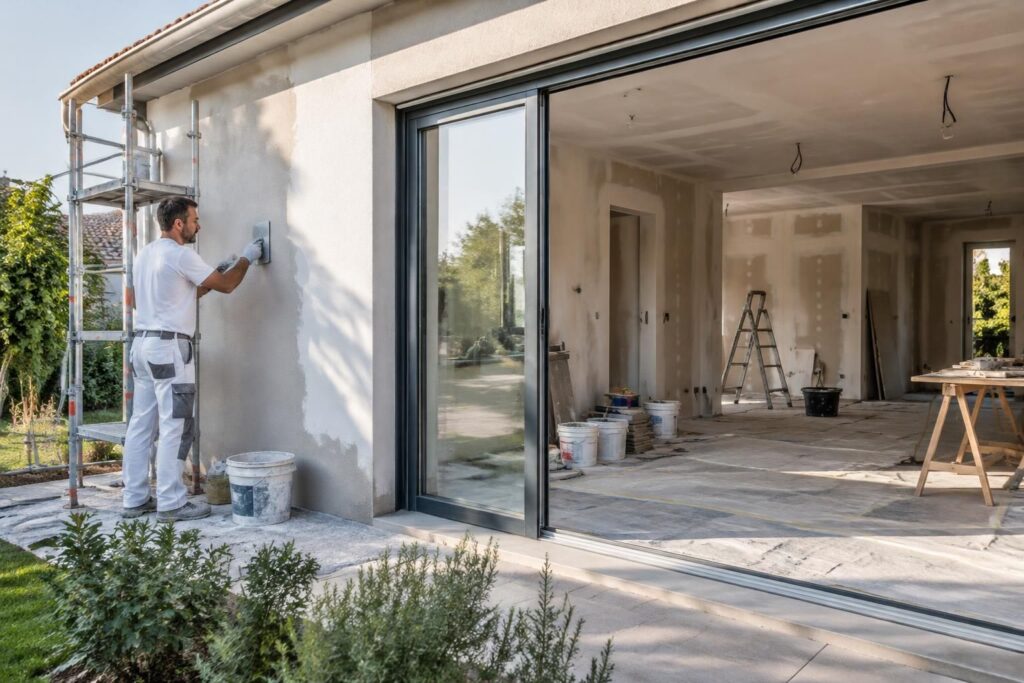
Hi, folks, Patrick here. Yes: secure the exterior first, especially the roof and façade, before doing the interior finishes. You’ll avoid water leaks, dust, and costly rework. The exact order depends, however, on the condition of the building and access to the site.
What to do right away
To put the steps in the right order, identify the priority work and compare it with a guide to the order of house renovations and this checklist of work to plan.
- Check the condition of the roof, walls, windows, and utilities.
- Identify sources of moisture and any work that could make a mess inside.
- Set a budget with a 10 to 15% contingency, depending on the situation.
- Request detailed quotes and check which administrative procedures are required.
- Schedule the work and protect rooms that have already been renovated.
Why finish the exterior before the interior finishes
The priority is to make the house watertight and weather-tight. A leaking roof or porous façade can damage insulation, partitions, and freshly applied paint.
So start with roof repairs, openings, and exterior work that could damage the interior. By contrast, the patio, planting, and some landscaping features can wait until the main work is finished.
Here’s an anecdote that sums up the trap: a homeowner painted his living room before fixing a roof leak. After water seeped in, he had to redo part of the walls and delay the rest of the project.
As the saying goes on a construction site: “A project without a plan is a journey without a compass.” Planning therefore protects both the budget and the result.
Two quick scenarios to help you choose the right order
If it’s a light renovation that doesn’t involve the building envelope, you can move ahead indoors once you’ve protected the rooms. If it’s a full renovation, deal with the roof, façade, and essential utilities first, then move on to the interior finishes.
The three steps to organizing the work
- Step 1: Assess the structure, roof, insulation, and utilities to identify urgent issues.
- Step 2: Set the schedule in the right order: structural work and weatherproofing, utilities, insulation and partitions, then flooring and paint.
- Step 3: Track progress with the tradespeople and adjust dates based on the weather, delivery times, and anything discovered on site.
This sequence prevents sensitive materials from being installed before the building is protected. It’s also worth grouping noisy or messy exterior work together to reduce back-and-forth trips and repeated protection measures.
What order should you follow for the roof, insulation, and finishes?
The roof and façade repairs come before interior insulation if they let water in. Once the building envelope is sound, insulation, utilities, and partitions can be completed before flooring and paint.
| Phase | Work to plan | Why do it at this stage? |
|---|---|---|
| Assessment | Structure, moisture, roof, utilities | Identify urgent issues before estimating costs |
| Exterior envelope | Roof, façade, windows, weatherproofing | Protect the building and the interior |
| Systems | Electrical, plumbing, heating, insulation | Avoid tearing out new finishes |
| Finishes | Partitions, floors, paint, fit-out | Work in a clean, dry space |
| Surroundings | Patio, garden, and exterior finishes | Limit damage caused by the work |
Timelines vary depending on the size of the house, the weather, and the availability of tradespeople. The principle is simple: work that protects and prepares comes before work that decorates.
When exterior and interior work can proceed in parallel
You don’t always need to wait until all the exterior work is finished. Once the areas concerned are watertight and exterior work no longer poses a risk to the rooms, some interior work can begin.
For example, one crew can prepare the utilities in a room farther away while another finishes part of the façade. However, you’ll need to coordinate access, protective measures, and deliveries; otherwise, the time saved can quickly disappear.
When planning the layout, also think about how the spaces connect. An unobstructed opening, a view of the garden, or coordinated materials indoors and out can make the house feel larger without changing its entire structure.
The right approach, then, isn’t to finish every exterior detail before moving indoors, but to secure the building envelope first and avoid having to return to work on finished surfaces.
Useful questions before starting the renovation
Do you need to finish the whole garden before interior work begins?
No. First, secure the exterior work that protects the house or could damage the interior. The patio and planting can generally wait.
Can you start insulating before replacing the roof?
If the roof is leaking or letting moisture in, repair it first. A sound building envelope helps protect the insulation and finishes.
When should you install the floors and paint the walls?
Generally, flooring and paint come after structural work, utilities, and partitions. Protect the surfaces if any work still needs to be done.
Can you live in the house during the work?
Sometimes, during a partial renovation, if one area remains safe and functional. For major work, plan to find somewhere else to stay, depending on the project’s duration and constraints.
Thanks for reading this far; Patrick