
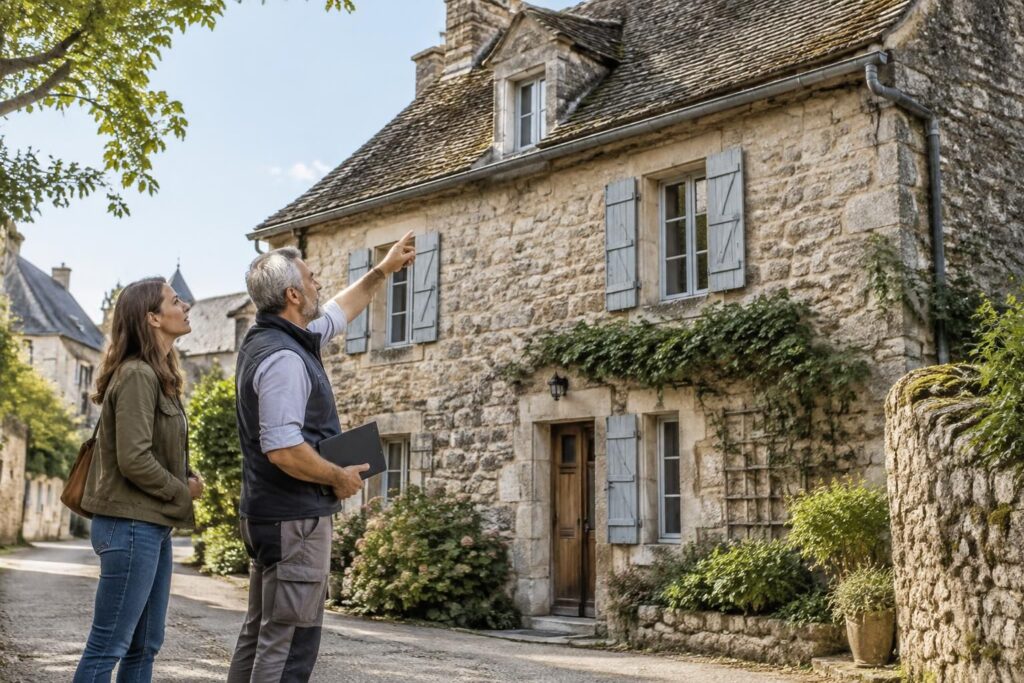
Hi, DIYers, Patrick here. Before buying an old house, check the structure, moisture, roof, utilities and inspection reports in that order, then price up the work before committing. These ten tips will help you spot unpleasant surprises and put together a realistic budget. A careful visit is better than a rushed love-at-first-sight decision.
Things to do right away
- Ask for the inspection reports and invoices for previous work.
- If possible, visit the house after a spell of rain.
- Look at the roof, gutters and ceilings.
- Test the taps, accessible outlets and heating.
- Note every defect and take dated photos.
Start by comparing the documents with what you see on site: a crack, a musty smell or aging equipment warrants further investigation. To find out which areas to check first, consult this pre-purchase checklist and this guide to inspecting an old house.
10 tips for inspecting an old house
A viewing is no substitute for a professional opinion, but it can help you spot warning signs that need closer examination. Go room by room, and also check the attic, basement and surrounding areas.
| Tip | What to check | Warning sign |
|---|---|---|
| 1. Examine the structure | Walls, floors, beams and stairs | Widening cracks, a very sloped floor |
| 2. Look for moisture | Bottoms of walls, basement, corners and woodwork | Persistent odor, blistering paint, white marks |
| 3. Check the roof | Visible roofing, gutters and attic | Displaced tiles, stained wood, daylight coming through the roof |
| 4. Check the electrical system | Electrical panel, accessible outlets and documents | Old wiring or issues noted in the inspection report |
| 5. Test the plumbing | Water pressure, drains, faucets and visible pipes | Leaks, signs of corrosion, slow drainage |
| 6. Assess the insulation | Attic, windows and cold walls | Drafts, large temperature fluctuations |
| 7. Read the inspection reports | Electrical system, lead, asbestos, energy efficiency and risks | Further work or inspections needed |
| 8. Inspect the openings | Windows, doors and shutters | Damaged wood, difficulty closing, worn seals |
| 9. Check the surrounding areas | Land, drainage and façades | Water draining toward the walls or poorly drained land |
| 10. Estimate costs before deciding | Quotes, urgent work and medium-term repairs | No budget allowance for unexpected costs |
An old house may have materials and movement patterns that differ from those in newer buildings. A crack does not always indicate a serious problem, but its shape, how it changes over time and its location all matter: have it examined if you have any concerns.
The 3-step process before buying
Step 1: Observe — Take your time during the first viewing. Look for visible defects, odors, water marks and differences between rooms.
Step 2: Cross-check — Compare your observations with the inspection reports, invoices and information from the seller. If anything is unclear, ask a contractor or building professional to carry out a focused inspection.
Step 3: Estimate the costs — Get quotes for priority work, then add a contingency based on the condition of the building. Depending on the situation, hidden repairs may change the expected cost.
During a viewing, a buyer noticed a faint water stain on the ceiling, directly beneath the attic. An inspection revealed an old leak: the roof repair was included in the budget before signing.
Two situations to distinguish between
If the structure seems sound and the defects are mostly related to comfort, prioritize the work. If you spot major cracks, widespread damp or deteriorated utilities, put your decision on hold until you have an expert opinion and quotes.
Plan your renovation in the right order
Don’t start redoing the finishes if the roof is leaking or the walls are still damp. “Deal with the cause first, then the signs”: this rule helps you avoid paying twice for the same work.
A well-planned renovation often follows this order: secure the structure and weatherproof the building, address water problems, bring the utilities up to standard, then improve insulation and redo the finishes. Every house has its own characteristics; adapt the sequence after an inspection.
Before you sign, keep the inspection reports, quotes and a list of questions to resolve close at hand. To plan the work without getting stuck at the outset, you can also consult this guide to the energy-efficiency renovation order for an old house.
Useful questions before buying an old house
What are the first things to check in an old house?
Start with the structure, moisture, roof and utilities. Then review the inspection reports and compare them with what you observe on site.
Should you have a professional inspect the house?
It is useful if you spot cracks, water marks, a deteriorated roof or old installations. A focused assessment can help estimate the work needed.
How should you plan your renovation budget?
List the urgent work, get several quotes and set aside a contingency for surprises. The cost depends on the condition of the building, the materials and the region.
In what order should you renovate an old house?
First address the structure and water ingress, then the utilities and insulation. Finish with the coverings and finishing work once the underlying causes have been resolved.
Thanks for reading this far; Patrick