
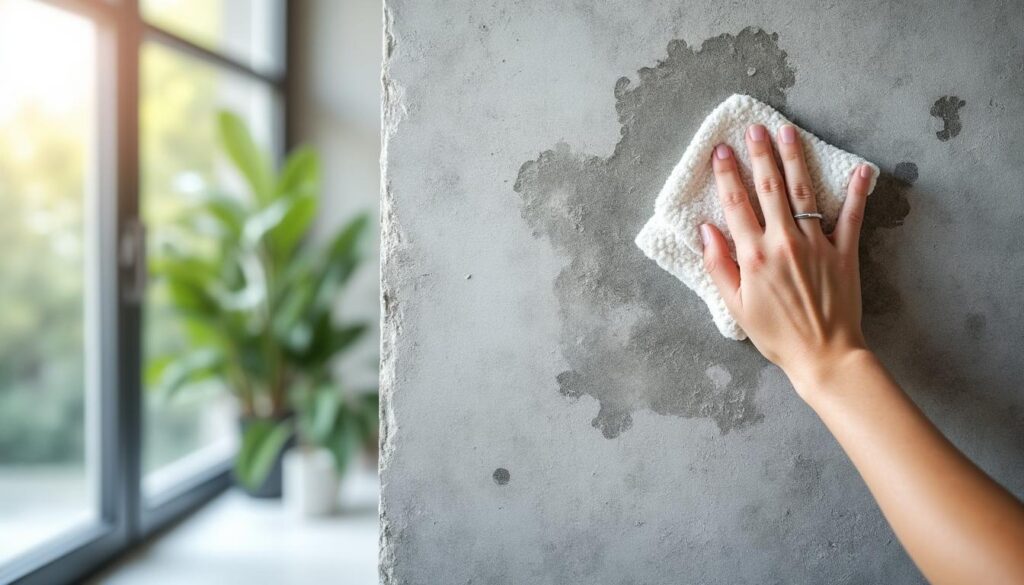
Hi DIYers, I’m Patrick. To repair a damp wall for good, you need to eliminate the cause — a leak, water ingress, condensation or rising damp — then let it dry before redoing the finish. Salt, baking soda or plants won’t repair damp masonry. Here’s how to investigate the cause and choose the right steps without hiding the problem.
Identify the causes of wall damp before repairing a wall at home
You can’t repair a damp wall by guesswork. First, you need to understand where the problem is coming from. Damp can have several causes: rising damp, water ingress through cracks or defects in waterproofing, condensation caused by poor ventilation, or hidden water leaks. Once you’ve identified the source, you can choose a treatment suited to the cause and the materials.
- Rising damp : water rises from the ground into the masonry, making the bottom of the wall damp.
- Water ingress : rain, faulty gutters or cracks allow water in.
- Condensation : poor ventilation causes excess water vapour indoors.
- Leaking pipes : often invisible, but a source of significant damage.
As an old saying goes: “To treat an ailment, you must first know its cause.” This is especially true when it comes to effectively repairing a damp wall.
| Cause of damp | Visible signs | Action to consider after diagnosis |
|---|---|---|
| Rising damp | Damp along the bottom of the wall, blistering paint | Assess the building and ground levels before choosing a treatment |
| Water ingress | Localised stains, mould | Find and repair the point of entry: roof, joint or façade |
| Condensation | Condensation on windows, musty smells | Check ventilation, sources of water vapour and cold surfaces |
| Leaks | Wet patches, crumbling plaster | Repair the pipe, dehumidify |
Salt and baking soda: why they don’t repair a damp wall
A bowl of salt or baking soda won’t fix a leak or remove water from the masonry. Even a dehumidifier is no substitute for repairing the cause. Measure the air humidity with a hygrometer at different times; this does not directly measure the water contained in the wall.
Clean the marks without hiding the cause
For a small area of mould, use a product that’s suitable for the surface, protect yourself and ventilate the room. Never mix products, especially vinegar and bleach, and avoid spraying essential oils into the air. If the stains spread, return or affect damaged porous materials, have the problem assessed.
Ventilation and airflow: useful steps to tackle condensation
Air out the room after showering and cooking, keep air inlets clear and maintain the ventilation vents. A mechanical ventilation system should operate as designed. Plants are no substitute for air exchange. Monitor how the stains change: if they appear after rain, near a pipe or at the base of a wall, there may be another cause.
| Observation | Possible cause | Check |
|---|---|---|
| Condensation and cold corners | Possible condensation | Ventilation and surface temperatures |
| Stain after rain | Possible water ingress | Roof, façade, gutters |
| Area near a pipe | Possible leak | Leak detection |
When and how to strengthen a damp wall to prevent the problem from returning
Once the cause has been fixed, let the surface dry and check its condition before filling or painting. Drying time varies according to the thickness, materials and ventilation: there is no single timeframe that suits every wall. Soap or a surface film won’t strengthen a wall or treat rising damp.
- After diagnosis and drying, choose a render that is compatible with the building.
- Don’t trap moisture beneath paint or a waterproof covering.
- Maintain good ventilation and prevent water from collecting around the wall.
As an old neighbour once told me: “A well-protected wall is a wall that will protect you for a long time.”
When should you seek a professional assessment?
Call in a professional if the affected area spreads, the plaster falls off, the wood deteriorates or the damp returns despite your initial efforts. A crack, significant water ingress or affected electrical equipment needs prompt attention. Make a note of the date, weather and how the marks change to help with the assessment.
Can you repaint straight away?
No: the cause must be dealt with, the surface must be sufficiently dry and any damaged areas must be repaired. Anti-damp paint is no substitute for this process. For reliable guidance on ventilation and initial observations, see ADEME’s advice on indoor air quality and damp in the home.
See you soon for more topics; Patrick