
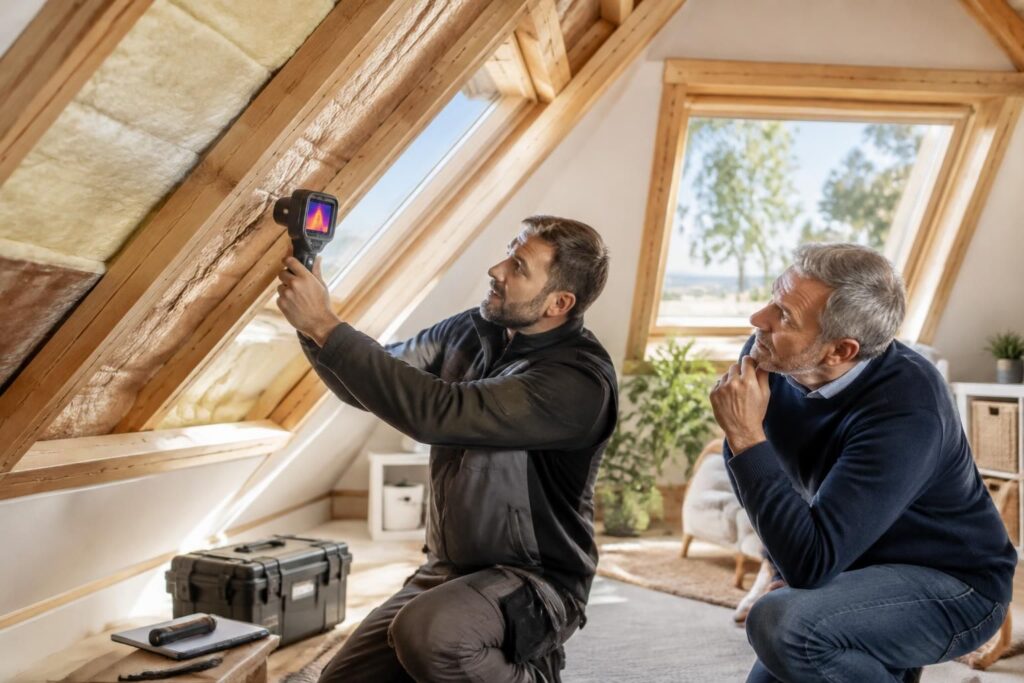
Hello, Patrick here. The best way to improve insulation without starting the wrong work is to first identify the main sources of heat loss, then address the most sensitive areas.
A cold wall doesn’t always mean you need to redo the entire room. Prioritizing the work properly avoids unnecessary expenses and improves comfort without demolition.
Things to do right away
- Check for drafts around windows, doors, and outlets.
- Check whether the cold is coming mainly from the walls, floor, or ceiling.
- Install suitable weatherstripping and close the shutters at night.
- Choose thermal curtains or a rug to improve comfort quickly.
- Before starting any work, look for signs of damp and maintain ventilation.
To distinguish simple measures from more extensive work, see this advice on work to plan before insulating and these tips to avoid the thermal bridge trap.
The pitfall to avoid before renovation work
Installing insulation on a damp wall or blocking air inlets can make problems worse instead of solving them. Damp encourages mold, while insufficient ventilation reduces air quality.
A thermal assessment helps identify cold spots and thermal bridges before you choose a solution. If the problem is mainly in the roof, loft insulation may be the priority; if a wall remains cold, you could consider insulating that wall locally.
Choose materials according to the area to be insulated
The choice of materials depends on the surface, the space available, and the condition of the substrate. The prices below are indicative material costs, excluding installation, and may vary according to thickness and specifications.
| Material | Typical use | Indicative price per m² |
|---|---|---|
| Rock wool | Interior walls, lofts | €15 to €35 |
| Cellulose wadding | Lofts, interior walls | €20 to €45 |
| Thin insulation panels | Areas with limited space for insulation | €25 to €50 |
| Expanded polystyrene | Floors and some walls | €10 to €30 |
| Hemp wool | Walls and lofts | €20 to €50 |
A thin material is not automatically the most effective: compare its specifications and check that it is suitable for the substrate. Well-designed thermal insulation can also reduce some noise, but the acoustic result depends on the entire assembly.
Insulate without redoing everything: a three-step approach
Effective energy renovation starts with targeted work, not with immediately buying insulation. Here’s a simple approach to help avoid mistakes.
- Find the cause. Inspect the walls, windows, loft, and floors. If there is damp, mold, or any concern about the structure, have the situation assessed before covering the surface.
- Set priorities. First address air leaks that are easy to fix, then compare options for the coldest areas. Curtains, weatherstripping, or rugs can make a room more comfortable, but they don’t replace inadequate insulation.
- Prepare carefully for installation. If panels or insulation are needed, follow the manufacturer’s instructions and treat the joints around openings. For more technical work, seek renovation advice from a qualified professional.
For example, if a room remains cold despite properly sealed windows, adding curtains may not be enough: check the relevant wall or ceiling before investing. Poorly installed insulation may be less effective and conceal an existing problem.
Small, useful measures—but don’t expect miracles
Closing the shutters in the evening, installing well-fitted weatherstripping, or placing a reflective panel behind a radiator are all accessible measures. They can sometimes improve comfort locally, but on their own they won’t fix a roof or wall that loses a lot of heat.
Financial assistance may be available for certain insulation work, subject to the rules in effect and eligibility criteria. Check the conditions before signing a quote, particularly the requirements relating to the contractor and the type of work.
Can you insulate a room without touching the walls?
Yes. Insulating the ceiling, loft, or floor can be considered, depending on the source of the heat loss. First identify the area responsible before choosing a solution.
Which material should you choose for partial insulation?
It depends on the surface and the space available. Rock wool, cellulose wadding, or certain panels may be suitable, but the substrate and quality of installation matter just as much as the material.
Are weatherstripping and thermal curtains enough?
They can reduce drafts and improve comfort near windows. However, they don’t replace work on the walls, floor, or roof if those areas are the main source of heat loss.
Should you deal with damp before insulating?
Yes. Identify and fix the cause of the damp before covering a wall. Also maintain adequate ventilation to reduce the risk of condensation and mold.
I hope you found these tips useful. See you soon! — Patrick