
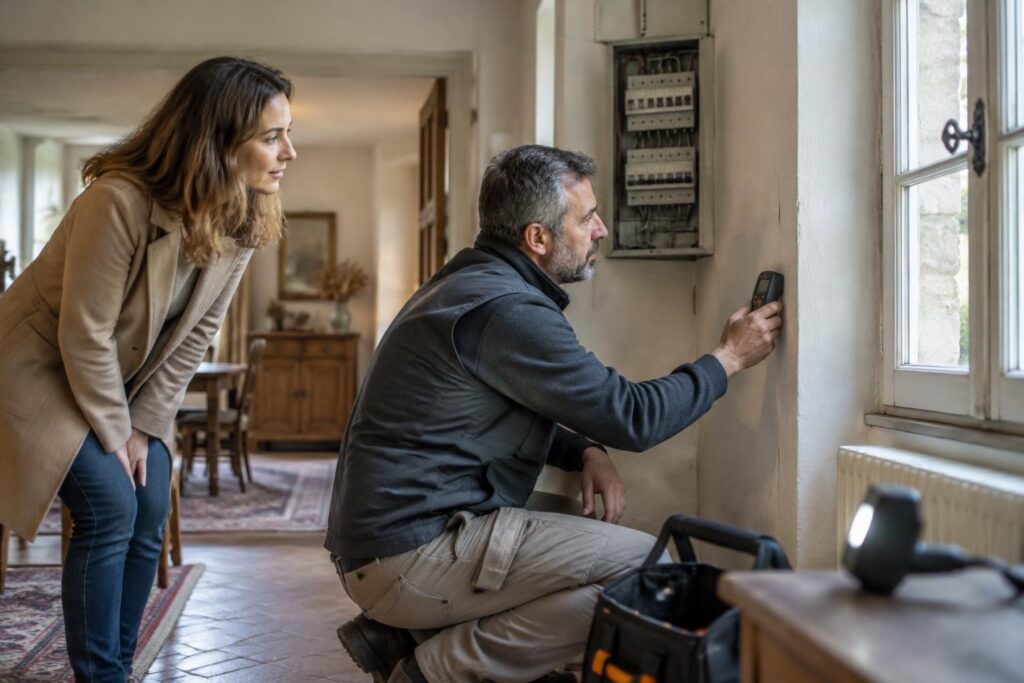
Hello, Patrick here. The assessment that helps you avoid the most regrets is an independent technical inspection before buying, supplemented by targeted assessments based on the age and condition of the property.
The documents provided by the seller offer useful information, but they do not always reveal every hidden defect or the true cost of repairs. Professional advice can turn these clues into practical decisions before you sign or pick up a hammer.
Things to do right away
- Arrange a thorough inspection before buying, with an independent professional if the property shows signs of wear and tear.
- Request the available inspection reports and check their dates, scope, and any recommendations.
- Have key areas checked: electrical systems, damp, roof, ventilation, and structure.
- Get estimates for priority repairs, allowing for unexpected costs rather than relying on a verbal estimate.
- Put off non-urgent work until the risks and order of work are clear.
To understand what a preliminary assessment can reveal, read this overview of assessing an old house and these tips on getting an audit before starting work.
The pitfall: confusing legally required assessments with a full inspection
A property inspection report covers a specific scope. An electrical inspection report identifies issues according to set inspection criteria, while an energy performance assessment provides information about energy efficiency and estimated consumption.
These documents do not necessarily amount to a full assessment of the roof, foundations, or water ingress. To prevent risks, you therefore need to review them alongside the property’s condition and request additional checks whenever something seems concerning.
Which assessment should you prioritize in each situation?
The right choice depends on the building’s age, its use, and any visible signs. In an old house, a musty smell or blistering paint warrants an investigation into damp, while an outdated electrical panel calls for a targeted inspection.
| Sign observed | Check to consider | Why take action |
|---|---|---|
| Old outlets or circuit breakers tripping | Electrical inspection or check by an electrician | Identify issues before renovation and occupancy |
| Stains, odors, or blistering paint | Investigate the source of the damp | Avoid covering up an active problem with a new finish |
| High bills or thermal discomfort | Energy performance assessment and insulation inspection | Prioritize worthwhile improvements |
| Cracks or visible distortion | Appropriate technical inspection | Assess the severity before repairing or renovating |
Real-life example: before buying a house built in the 1960s, Claire notices a recently repainted partition wall and a persistent smell in one bedroom. An inspection reveals water ingress near a window; without this step, she would have renovated the room before addressing the cause.
A three-step approach to avoid unpleasant surprises
An assessment is truly useful when its findings guide your decisions. Here is a simple process to help you avoid signing too soon or starting work in the wrong order.
- Gather the documents. Request the inspection reports, invoices for previous work, and any available information about past repairs. Also note any visible defects during the viewing.
- Have your concerns investigated. Contact the specialist suited to the problem: an electrician, damp specialist, or building expert. Ask them to explain the inspection’s limitations and any additional investigations needed.
- Make decisions based on the numbers. Compare urgent repairs, desirable improvements, and their estimated costs. Use this information to adjust your budget, negotiate, or walk away if the risk remains too high.
An assessment cannot guarantee that no defects will be discovered later. However, a well-targeted inspection greatly reduces blind spots and helps you plan the work in the right order.
Frequently asked questions before buying a property
Is the property inspection report provided by the seller enough?
It provides information about specific areas, but it does not always replace a full technical inspection. If you have concerns about the structure, damp, or systems, request an appropriate inspection.
When should the property be inspected?
As early as possible before finalizing the purchase or starting work, so you have enough time to request clarification and get repair estimates.
Can an energy performance assessment identify hidden defects?
It provides information about energy efficiency, but it does not necessarily detect every problem with damp, the structure, or the electrical system. Targeted checks may be needed.
What should I do if the inspection reveals major repairs?
Request a description of the work and written estimates. You can then reassess your budget, negotiate, or walk away with a clear understanding of the situation.
Thanks for reading! I’d love to hear what you think in the comments. — Patrick